When your car keeps draining batteries, flickers its lights at odd moments, or triggers the battery warning light while the engine is running, the alternator is often the real story behind the drama. Because alternator failure is gradual and its early symptoms overlap with those of a weak battery, it frequently goes undiagnosed until it’s too late — leaving drivers stranded and facing a larger repair bill than necessary.
This guide explains the warning signs of a failing alternator, why it causes so much collateral damage, what repairs typically cost in Thailand, and what we can check for you on-site right here in Phuket.
What an Alternator Does
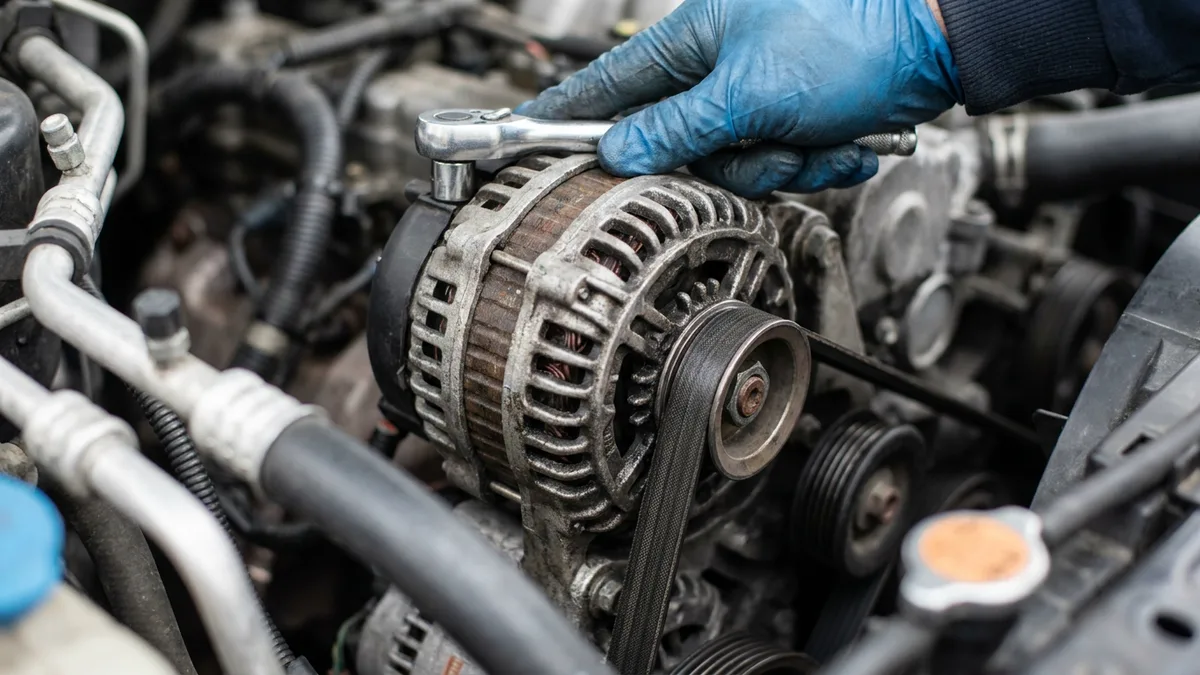
The alternator is a generator driven by a belt from the engine crankshaft. While the engine is running, it produces alternating current (AC), which an internal rectifier converts to direct current (DC) at around 13.7–14.7 volts. This powers all the car’s electrical systems — the air conditioning, headlights, infotainment, power windows, engine management — and simultaneously recharges the battery.
When the alternator weakens or fails, the car shifts to running entirely on battery power. The battery was never designed for this role; it’s meant to deliver a short cranking burst and then be immediately recharged. Running the entire car’s electrical load on a battery alone drains it within minutes to an hour.
7 Warning Signs of a Failing Alternator
1. The Battery Warning Light Comes On While Driving
This is the most common symptom and is frequently misread as a “battery problem.” The battery light actually monitors the charging system’s output voltage. If it illuminates while the engine is running, the alternator is not producing sufficient voltage — not necessarily that the battery itself is dead.
2. Dim or Flickering Lights
Headlights that dim when the car is idling, or interior lights that flicker randomly, indicate the alternator is struggling to maintain steady voltage output. You may notice the lights brighten when you rev the engine — a classic sign of an alternator that’s producing some output but not enough at low RPM.
3. Electrical Accessories Acting Erratically
Power windows moving slowly, the radio resetting, the backup camera cutting out — any combination of electrical oddities happening while the engine is on points toward an unstable charging system rather than a battery fault.
4. Whining, Grinding, or Squealing from the Engine Bay
Alternators contain bearings and brushes that wear over time. A failing bearing produces a whining or grinding noise that typically increases in pitch with engine RPM. A slipping drive belt can cause squealing, which may worsen when you turn on the AC or switch on high-load accessories.
5. Burning Smell
Overheating wires inside the alternator, or a belt slipping against the alternator pulley, can produce a burning rubber or hot electrical smell from the engine bay. This warrants immediate attention.
6. Dead Battery Despite Recent Replacement
If you’ve replaced the battery within the last year and it’s dead again — especially if the car was driven regularly — the alternator is almost certainly not recharging it. A new battery in a car with a failed alternator will be dead within a handful of drives.
7. The Car Stalls or Won’t Restart After Running
When the alternator completely stops producing power, the battery drains to the point where the engine management system can’t maintain ignition. The car may stall while driving, or it may start one last time after sitting but refuse to start again once the remaining charge is gone.
Why a Bad Alternator Destroys Batteries
A failing alternator damages batteries in two distinct ways depending on how it fails:
Undercharging: The most common failure mode. The alternator produces insufficient voltage, so the battery never fully recharges between drives. Repeated partial-charge cycles cause sulfation — lead sulfate crystals building up on the battery plates — which permanently reduces capacity. Within a few weeks, a healthy battery can be damaged to the point where it fails load testing.
Overcharging: A failed voltage regulator (often integrated into the alternator itself) can cause the output to climb above 14.8 V. Excess voltage forces the battery electrolyte to gas aggressively, evaporating fluid, corroding the plates, and potentially swelling the case. This can ruin a new battery in a matter of days.
Approximate Alternator Replacement Cost in Thailand
These figures are approximate estimates based on common market rates and are subject to variation based on your specific vehicle, chosen workshop, and current parts availability. Always get a written quote before authorizing repairs.
| Vehicle Category | Remanufactured/Aftermarket (THB) | OEM/New (THB) | Typical Labor (THB) |
|---|---|---|---|
| Japanese economy (Honda, Toyota, Nissan) | 3,500–6,000 | 8,000–15,000 | 1,500–2,500 |
| Korean (Hyundai, Kia, Chevrolet) | 4,000–7,000 | 8,000–14,000 | 1,500–2,500 |
| European entry-level (VW, Peugeot, Ford) | 5,000–10,000 | 12,000–22,000 | 2,000–3,500 |
| Luxury / performance | 8,000–15,000+ | 20,000–40,000+ | 3,000–5,000+ |
Rebuilding (reconditioning) the original alternator is often an option for older vehicles and can be significantly cheaper — sometimes 2,000–4,000 THB at a specialist electrical workshop — though the longevity of a reconditioned unit varies.
In Phuket, authorized dealers in Phuket Town and independent garages on Chao Fa Road are the main options for this work. Get at least two quotes, and ask specifically whether the labor quote includes belt replacement (which is advisable any time the alternator is out).
What We Can Test On-Site
Battery Fast Phuket doesn’t replace alternators — that’s workshop work requiring the alternator to come off the engine. But we can do something equally important: tell you conclusively whether your alternator is the problem before you spend money on a replacement battery or an unnecessary workshop visit.
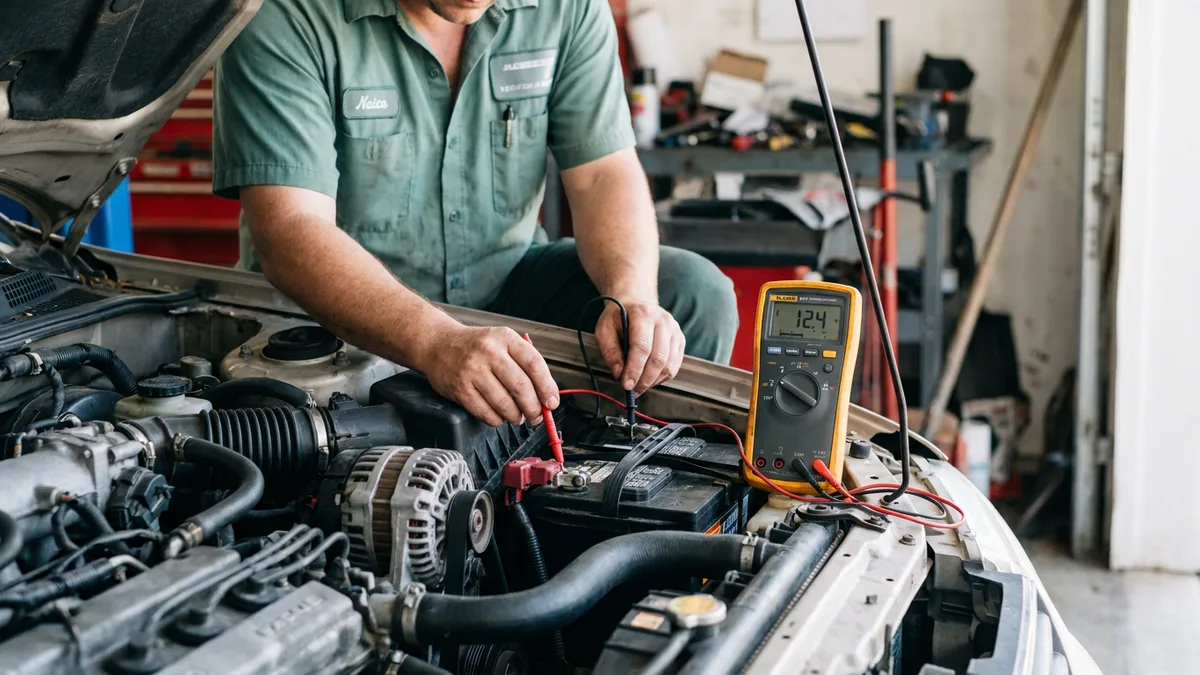
Our mobile battery testing service includes a full charging system check. Using a digital battery and charging system analyzer, we measure:
- Battery resting voltage and cold-cranking capacity (load test)
- Alternator output voltage at idle and under load
- Voltage regulator stability
- Ripple voltage (which reveals internal alternator diode failure)
If the results show the alternator is faulty, we’ll tell you clearly — so you go to the workshop knowing exactly what’s wrong and can get an accurate quote. If it’s actually just the battery, we can replace it on-site with no workshop visit needed. Read our guide on battery vs. alternator diagnosis for the full comparison, or check our signs your battery is dying guide to see which symptoms point which way.
If you’re in Phuket and you’re seeing any of the warning signs above, don’t wait — call us and we’ll come to your location, test the system properly, and give you the full picture before anything gets replaced.