Phuket’s heat is relentless, and your car battery is quietly taking the brunt of it every single day. Most drivers don’t think about their battery until they turn the key and nothing happens — stranded in a car park, late for a ferry, or stuck at the roadside in the rain. The good news is that a failing battery almost always gives you advance warning. You just have to know what to look for.
Here are the seven signs of a dead car battery (or one on its way out) that every driver in Phuket should recognize. Catch even one of them early and you can swap the battery on your schedule instead of calling for help at midnight.
1. The Engine Cranks Slowly
This is the single most reliable early warning sign. When you turn the key or press the start button, the starter motor draws a massive surge of current from the battery. A healthy battery delivers that surge instantly. A weak one struggles to keep up, and you hear it: the engine turns over sluggishly, almost like it’s wading through mud before it eventually fires.
If that sluggishness appears only on cold early mornings, it might pass after the car warms up — but don’t be fooled. The cold (or in Phuket’s case, a cool, air-conditioned parking garage) temporarily reduces battery capacity, and a marginal battery will reveal itself there first. Take it as a warning.
2. You Hear a Clicking Sound — No Start
A single loud click or a rapid series of clicks when you turn the key usually means the battery doesn’t have enough charge to engage the starter motor at all. The solenoid clicks, but there’s no follow-through.
This is one of the clearest signs of a dead car battery in the moment — the car simply will not start. A jump-start will usually get you going temporarily, but the underlying battery needs attention right away. Our jump-start service is available 24 hours for exactly this situation.
3. Headlights or Interior Lights Are Noticeably Dim
Your car’s electrical system runs off the battery at idle and off the alternator once the engine is running. If you notice that your headlights are duller than they used to be — especially at idle or just after starting — the battery may not be holding a full charge.
A quick test: turn on your headlights before starting the engine. They should be reasonably bright. Now start the car. They should get slightly brighter once the alternator kicks in. If they’re already very dim before you start, or barely change, your battery voltage is low.
4. Electrical Gremlins and Random Glitches
Modern cars pack a surprising amount of electronics: power windows, central locking, infotainment systems, backup cameras, and adaptive features that all draw from the battery. A weak battery that can’t maintain stable voltage causes these systems to behave erratically.
You might see the radio reset to factory defaults, the windows move slower than usual, the dashboard flicker, or the remote key fob lose range. These “electrical gremlins” are sometimes written off as software bugs or sensor failures — but a simple battery health check often reveals the real cause.
5. A Swollen or Deformed Battery Case
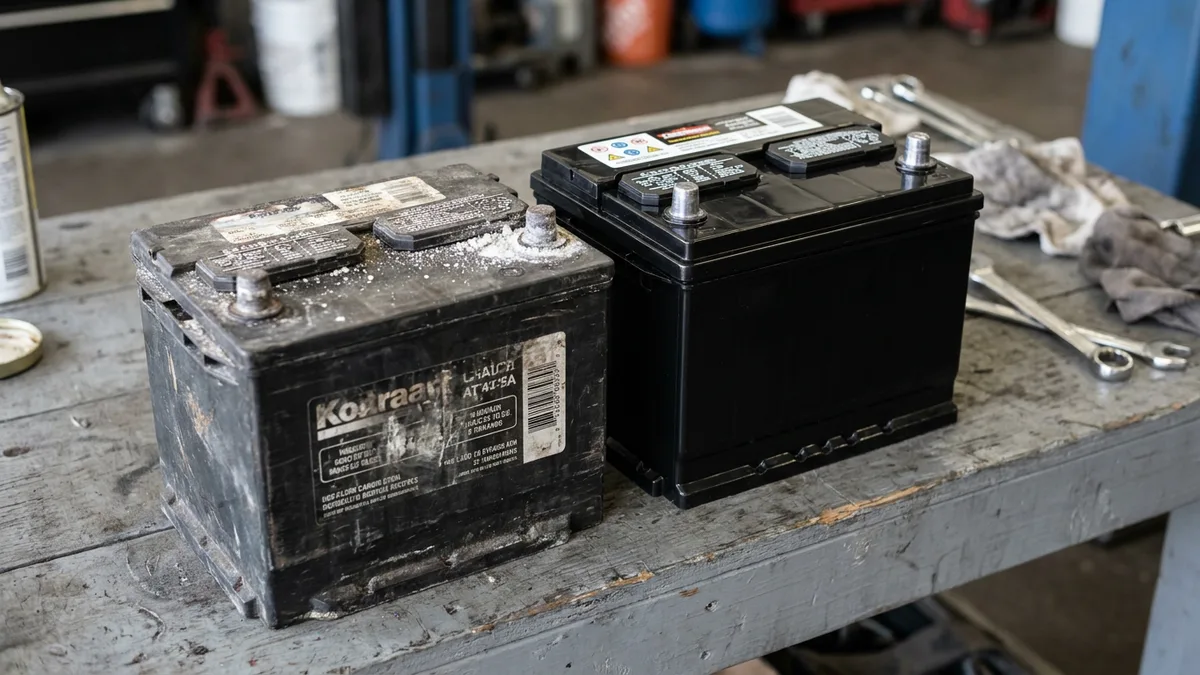
This one is easy to spot if you pop the bonnet and take a look. A healthy battery has a flat, rectangular case. If the sides are bulging outward or the top has a dome shape, the battery is swollen — and it needs to come out immediately.
Swelling is caused by excessive heat or overcharging, which builds up gases inside the sealed case. In Phuket, where under-bonnet temperatures can exceed 60 °C on a parked car in the afternoon sun, this happens more often than you’d expect. A swollen battery can leak, short-circuit internally, or in rare cases rupture. Don’t drive on one.
6. Your Battery Is More Than 3 Years Old
Age alone is a warning sign. In temperate climates, a quality battery can last 4–5 years. In Phuket’s tropical heat, realistically expect 2–3 years from most batteries — sometimes less from cheaper brands. After the 2-year mark, it’s worth getting a load test done even if the battery seems fine.
If you’re a long-stay tourist or expat who has owned your car (or rental) for a while, check when the battery was last replaced. The sticker on the battery usually shows a date code. If you can’t find one or the date has faded, that’s its own red flag.
7. You’ve Had to Jump-Start the Car More Than Twice
Jump-starting a car once is an inconvenience. Doing it twice in a short period is a pattern. If your car needs a jump-start more than twice within a few weeks — and there’s no obvious reason like lights left on — the battery is no longer holding a charge between uses.
A battery that repeatedly discharges overnight or over a weekend may also have a parasitic drain issue (something drawing power when the car is off), but the battery itself may also be too degraded to recover fully even after charging. Either way, the problem needs to be diagnosed rather than jumped again and again.
How Phuket’s Climate Makes Things Worse
Heat is a battery’s worst enemy. Every 10 °C rise in temperature roughly doubles the rate of internal chemical degradation. Phuket averages 29–34 °C year-round, and direct sun can push that significantly higher on a parked car. This relentless thermal stress evaporates the electrolyte inside the battery, corrodes the plates, and shortens the life you’d otherwise get.
Add in stop-and-go traffic that keeps the alternator from running at full speed for extended periods, frequent short trips that don’t fully recharge the battery, and the high electrical loads from powerful air conditioning, and it’s easy to see why batteries fail faster here than in Europe or North America.
What to Do When You Spot These Signs
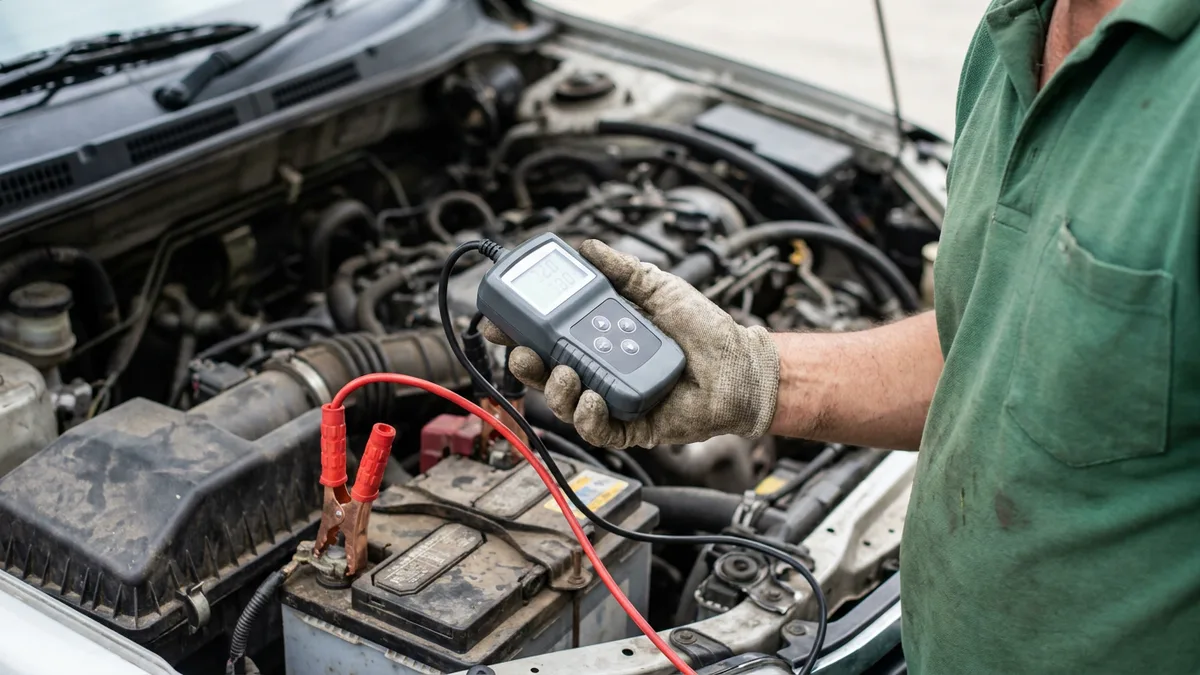
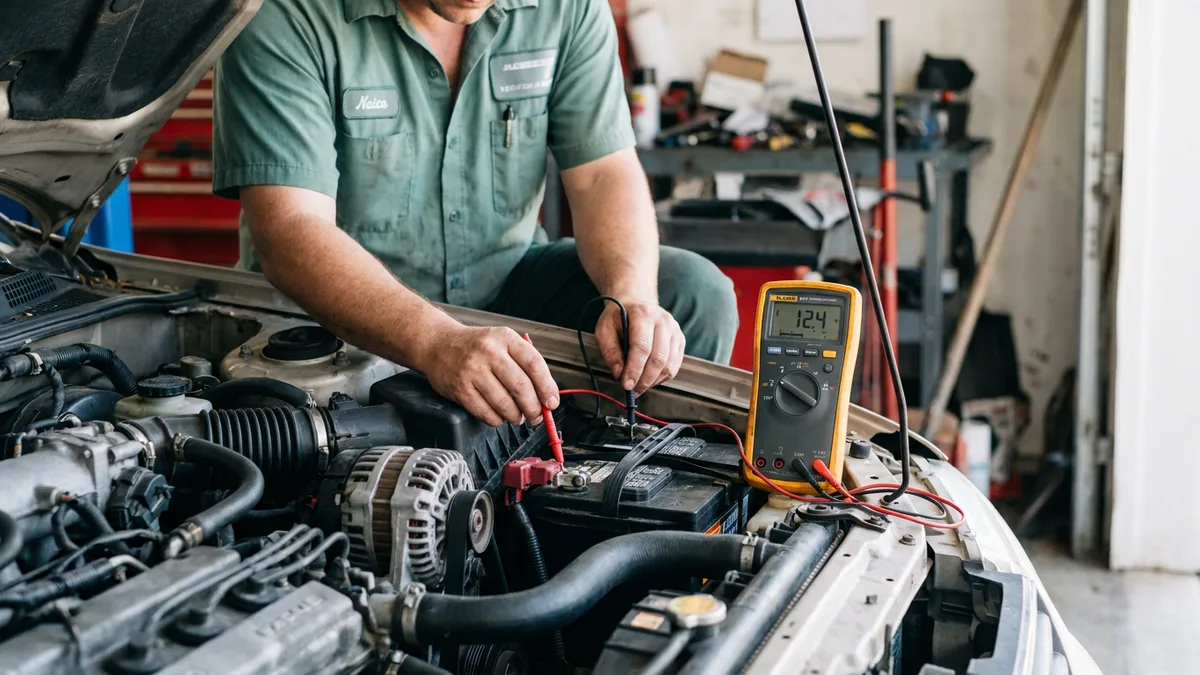
If you notice one or more of these warning signs, the first step is a proper load test. A multimeter reading of resting voltage tells you something (a healthy battery should read around 12.6 V with the engine off), but a load test under actual current draw tells you whether the battery can still perform under real conditions.
Our battery testing service uses a digital load tester to give you a pass/fail result on the spot. If the battery fails, we carry replacement batteries and can fit one at your location — whether you’re at a hotel in Patong, a villa in Rawai, or a car park anywhere in Phuket. Learn more about what’s involved in a full car battery replacement.
If you’re unsure whether it’s the battery or the alternator causing your symptoms, take a look at our guide on battery vs. alternator diagnosis before booking a service.
Don’t wait until the car won’t start — if any of these signs sound familiar, give us a call and we’ll come to you, any time of day or night.