You sit down, put the key in (or press the button), and nothing happens. Or something happens, but the car still will not start. In Phuket, a dead battery is overwhelmingly the most common reason — the tropical heat shortens battery life significantly, and cars sitting in hotel car parks or villa driveways between uses are especially vulnerable. But a car won’t start for a range of reasons, and the fix for each one is different.
The fastest way to narrow it down is to listen and observe carefully. What the car does — or does not do — when you try to start it tells you a great deal about where the fault lies. This guide walks through the eight most common causes, how to identify each one by its symptoms, and what you can do about it.
1. Dead or severely discharged battery
What it sounds like: Complete silence, or a single weak thud when you turn the key. The dashboard lights may be dim or completely absent.
What it feels like: Pressing the start button or turning the key produces nothing. The remote key fob may still work (it uses a separate CR2032 battery), but the car refuses to respond.
Why it happens in Phuket: Heat accelerates battery degradation. A battery that might last five years in a cooler climate often lasts just two to three years here. Cars parked in direct sun all day, every day, age their batteries at an accelerated rate. Vehicles that sit unused for a week or more also slowly self-discharge.
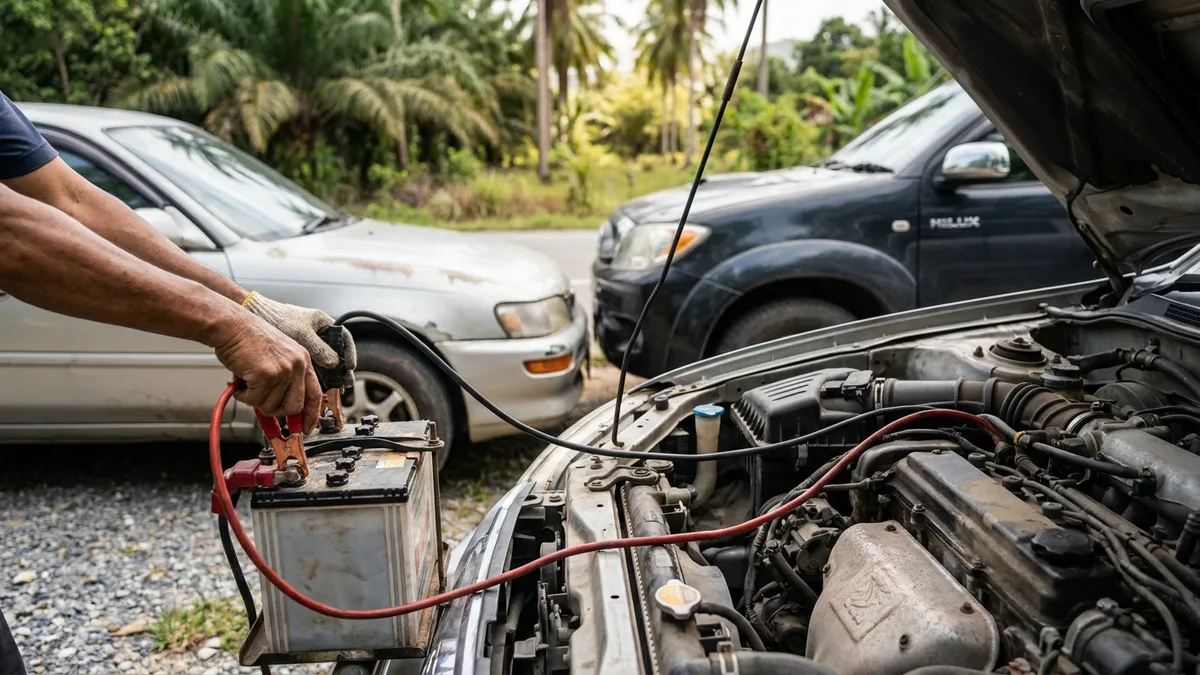
The fix: A jump-start using cables or a portable jump starter pack will usually get the engine running. Once it is running, drive for at least 30 minutes to let the alternator recharge. Then get the battery load-tested — a battery that reached flat may not fully recover its capacity. If testing shows it is degraded, replacement is the right call.
2. Battery has some charge but not enough — rapid clicking
What it sounds like: A rapid-fire series of clicks — sometimes described as a machine-gun sound — when you turn the key or press start.
What it feels like: The car is trying to do something but cannot quite get there. Dashboard lights may flicker or dim during the clicking.
Why it happens: The battery has enough charge to activate the starter solenoid (which makes the clicking) but not enough to spin the heavy starter motor. The solenoid chatters rapidly as it tries and fails to latch.
The fix: This is still a battery problem and responds to a jump-start in most cases. However, a battery that drops to this state regularly is telling you it has lost significant capacity. Know the signs your battery is dying and test it before it strands you again.
3. Faulty or failing starter motor
What it sounds like: A single solid click — one click only — when you turn the key, with no cranking whatsoever. The lights and electronics work normally.
What it feels like: The car has full electrical power (bright dash lights, working radio) but the engine does not attempt to turn over at all.
Why it is different from a battery problem: With a dead battery, everything is dim or silent. With a starter fault, the electronics are healthy — the battery is clearly charged — but the engine refuses to crank.
The fix: This is a mechanical fault that needs a mechanic. Occasionally tapping the starter motor body firmly with a spanner (if you can reach it) will free a stuck solenoid long enough to start the car and get it to a workshop — this is a one-time get-you-home trick, not a repair. A dead starter is not something a jump-start will resolve.
4. Bad alternator
What it sounds like: The car starts normally, but the battery warning light (a red battery icon) illuminates on the dashboard while driving. Eventually, the car becomes sluggish and then stalls entirely.
What it feels like: The car works initially but progressively loses electrical functions. Headlights dim, the air conditioning cuts out, and ultimately the engine dies.
Why it happens: The alternator charges the battery while the engine runs. If it fails, the car runs entirely on battery power — which is rapidly depleted. In Phuket’s heat, alternators occasionally fail early due to heat-related diode failure.
The fix: Jump-starting will not help long-term. The car will start after a boost but die again within minutes or miles. The alternator needs testing and likely replacement. This is different from a battery fault and understanding battery vs alternator symptoms can save you an unnecessary battery purchase.
5. Corroded or loose battery terminals
What it sounds like: Intermittent — sometimes starts, sometimes does not. Or it starts but the connection feels unreliable; the engine hesitates or cuts under electrical load.
What it feels like: The car may start perfectly one morning and refuse the next, with no apparent reason. Wiggling the battery cables sometimes makes a difference.
Why it happens: White or blue-green crust (lead sulfate and copper oxide deposits) builds up on battery terminals, particularly in humid climates like Phuket’s. This corrosion increases electrical resistance, reducing the current that can flow to the starter.
The fix: Clean the terminals. Remove the cable clamps (negative first), scrub the terminals and clamp contacts with a stiff brush and a paste of baking soda and water, rinse, dry, and reconnect (positive first). Apply a thin coat of petroleum jelly or terminal grease to slow future buildup. If the corrosion is severe or the terminal has cracked, the battery needs replacing.
6. Fuel system fault (cranks but won’t fire)
What it sounds like: The starter motor cranks normally — the engine turns over at full speed — but the car refuses to actually start. It just keeps cranking.
What it feels like: All the electrical sounds are healthy and normal. The engine sounds like it wants to start but never quite catches. Sometimes a faint smell of fuel, or sometimes nothing at all.
Why it happens: The engine needs fuel, spark, and compression. If the fuel pump has failed, the fuel filter is blocked, or the car has simply run out of fuel (it happens — fuel gauges in older cars can be unreliable), the engine will crank without firing.
The fix: This is not a battery or electrical issue. Check the obvious first — is there actually fuel in the tank? If so, the fuel pump, fuel filter, or fuel injectors are the suspects and the car needs a mechanic. A jump-start will do nothing useful here.
7. Immobiliser or key fob problem
What it sounds like: The starter may crank briefly then cut out, or the car simply refuses to crank at all despite healthy battery voltage. A flashing immobiliser warning light (usually a car outline with a padlock) on the dashboard is the tell.
What it feels like: All electrics work, but the engine seems to be deliberately prevented from starting rather than unable to.
Why it happens: Modern cars have an electronic immobiliser that prevents the engine from running unless it recognises the key’s chip. If the chip in your key fob is damaged, the battery in the fob is flat, or there is a fault in the immobiliser system itself, the car will not start.
The fix: Try the spare key if you have one — this quickly confirms whether the primary key is the problem. Replace the CR2032 battery in the key fob if it has not been changed recently (most fobs need a new one every two to three years). If neither helps, the immobiliser system needs a diagnostic scan from a mechanic or dealer.
8. Blown fuse
What it sounds like: Complete silence, or partial electrical function with no cranking. This can mimic a dead battery symptom.
What it feels like: Some electronics may work while others do not. There may be no obvious pattern.
Why it happens: A blown main fuse or fusible link can interrupt power to the starter circuit. This is less common than the causes above but worth checking, particularly if the car was recently serviced or had any electrical work done.
The fix: Locate the main fuse box (usually under the bonnet and/or under the dashboard) and check for blown fuses. A blown fuse is usually identifiable by a broken wire visible through the clear plastic window. Replace like-for-like. If fuses keep blowing, there is an underlying short circuit that needs professional diagnosis.
Quick reference: what the symptoms mean
| Symptom | Most likely cause |
|---|---|
| Complete silence, dim or no dash lights | Dead battery |
| Rapid clicking, lights flicker | Battery too weak to crank |
| One solid click, normal electrics | Faulty starter motor |
| Starts but battery light comes on, then stalls | Failing alternator |
| Intermittent starts, visible corrosion | Corroded/loose terminals |
| Cranks normally but won’t fire | Fuel system or ignition fault |
| Immobiliser warning light flashing | Key fob or immobiliser issue |
| Some electrics dead | Blown fuse |
When to call for help in Phuket
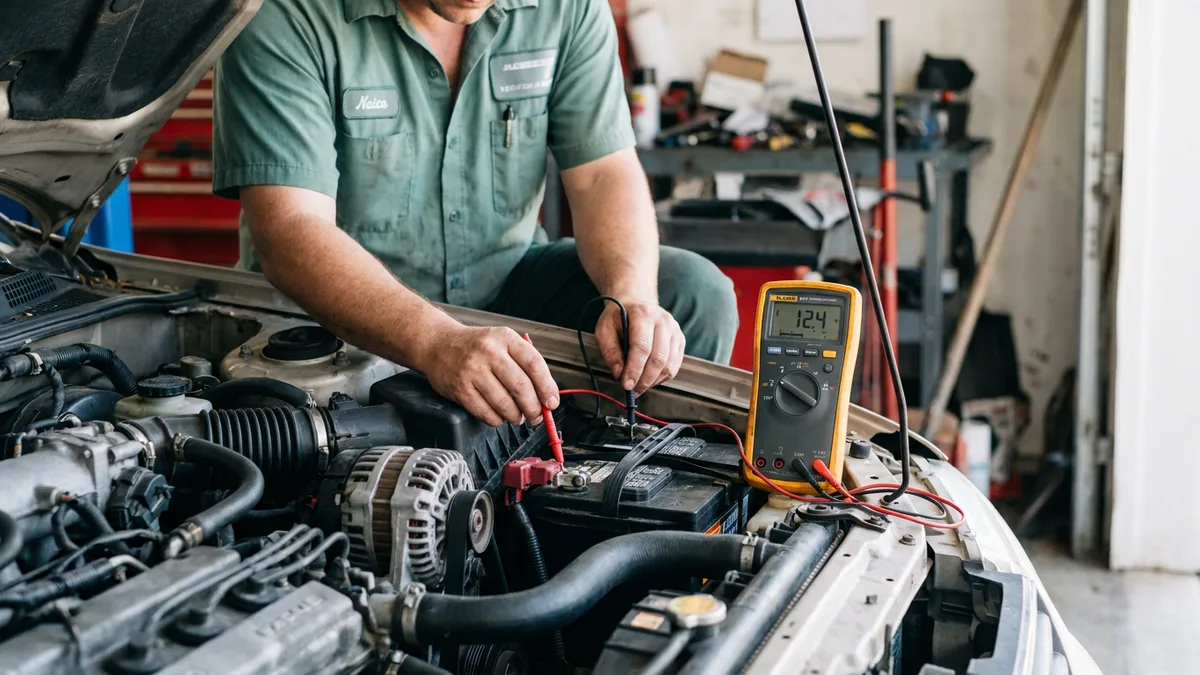
If the problem is a dead battery or weak battery — causes one and two above — our mobile jump-start service can reach you anywhere on the island within about 30 minutes, any time of day or night. We carry professional jump equipment and a full stock of batteries, and we can run a battery and alternator test on the spot to confirm which component is at fault.
If the car cranks but will not fire, or shows clear signs of a non-battery electrical fault, let us know the symptoms when you call — we will advise whether we can help directly or whether you need a local mechanic, and we can often recommend one.
Call or message us on LINE with your location and what the car is doing, and we will take it from there.