When electric vehicles and hybrids started becoming more common in Phuket — Teslas in the resort car parks, Toyota Corollas Cross and Fortuner hybrids everywhere else, BYDs increasingly visible on the streets — a reasonable question started coming up more often: are these cars immune to the battery problems that stranded-tourist calls are usually about?
The short answer is no. And the reason comes down to something many people don’t know about EVs and hybrids: every single one of them, without exception, has a conventional 12V battery sitting alongside the high-voltage traction pack. That small battery powers the computers, the lights, the door locks, and the systems that allow the main battery to work at all. When it dies — and in Phuket’s heat, it dies on roughly the same schedule as any other 12-volt battery — the car is as dead as any petrol vehicle with a flat battery.
This guide explains the electric car battery vs petrol comparison clearly, covers what’s different between the three main powertrain types, and clarifies exactly what we service and what we don’t.
The Three Powertrain Types: What’s Under the Bonnet
Petrol and Diesel Vehicles
A conventional petrol or diesel car has one battery: a 12V lead-acid (or AGM, in many modern cars) battery. Its job is to power the starter motor during cold start, run all the electronics, and handle any electrical load when the alternator isn’t producing enough output.
Once the engine is running, the alternator takes over and keeps the battery charged. The battery is essentially a large capacitor and emergency power reserve — it’s not doing constant heavy work while the car is moving, but it’s under significant demand for a few seconds every time the engine starts.
In Phuket’s heat, a standard flooded battery in a petrol car typically lasts 2–3 years before needing replacement. AGM batteries, which are sealed and handle heat somewhat better, may last 3–4 years.
Hybrid Vehicles
A hybrid (HEV) like the Toyota Corolla Cross Hybrid, Camry Hybrid, or Honda Jazz e:HEV has two separate battery systems:
High-voltage traction battery — typically 200–400V, nickel-metal hydride (NiMH) or lithium-ion, located under the rear seat or in the trunk. This is the battery that stores energy from regenerative braking and powers the electric motor to assist or replace the petrol engine. It is managed entirely by the vehicle’s battery management system and is not serviceable by roadside battery technicians.
12V auxiliary battery — a standard lead-acid or AGM battery, located in the engine bay or trunk, just like in a petrol car. This battery powers the car’s computers, door locks, lights, infotainment, and the control electronics that allow the high-voltage system to function. If this 12V battery dies, the car will not start — even if the traction battery is at full charge.
The 12V auxiliary battery in a hybrid is subject to the same heat-related degradation as in any other car. In Phuket, expect 2–3 years from a standard battery; some hybrids use a slightly smaller format battery that can be harder to source locally, but common hybrid models are well-stocked.
Electric Vehicles (BEV)
A full battery-electric vehicle like a Tesla Model 3, BYD Atto 3, or Ora Good Cat has the same two-battery structure as a hybrid:
High-voltage traction pack — the large, high-energy battery pack (typically 40–100 kWh) that powers the electric motor and gives the car its driving range. This is the battery EV marketing talks about. It is a complex, sealed, high-voltage system that requires specialized equipment and training to service. It is managed by sophisticated thermal and battery management systems. We do not service high-voltage traction packs.
12V auxiliary battery — a conventional 12V lead-acid or AGM battery that powers the car’s electronics, controls the high-voltage contactor relays, and manages the systems that allow the traction pack to connect and operate. Without this small battery functioning correctly, a fully charged EV will not start and may not even open the doors with the key fob.
This is not a commonly advertised fact, but it catches EV owners off guard regularly. A Tesla with 80% charge on the main battery and a dead 12V auxiliary battery is as immobile as a petrol car with a flat battery.
The 12V Battery: Why It Matters for All Three Types
The 12V auxiliary battery is present in every passenger vehicle currently sold — petrol, hybrid, or full EV. Its role differs slightly between powertrains:
| Vehicle Type | 12V Battery Role | Fails Like a Normal Battery? |
|---|---|---|
| Petrol/Diesel | Starter motor, electronics, alternator backup | Yes |
| Hybrid (HEV) | Electronics, HV system control, infotainment | Yes |
| Plug-in Hybrid (PHEV) | Electronics, HV system control | Yes |
| Full Electric (BEV) | Electronics, door locks, HV contactors, computers | Yes |
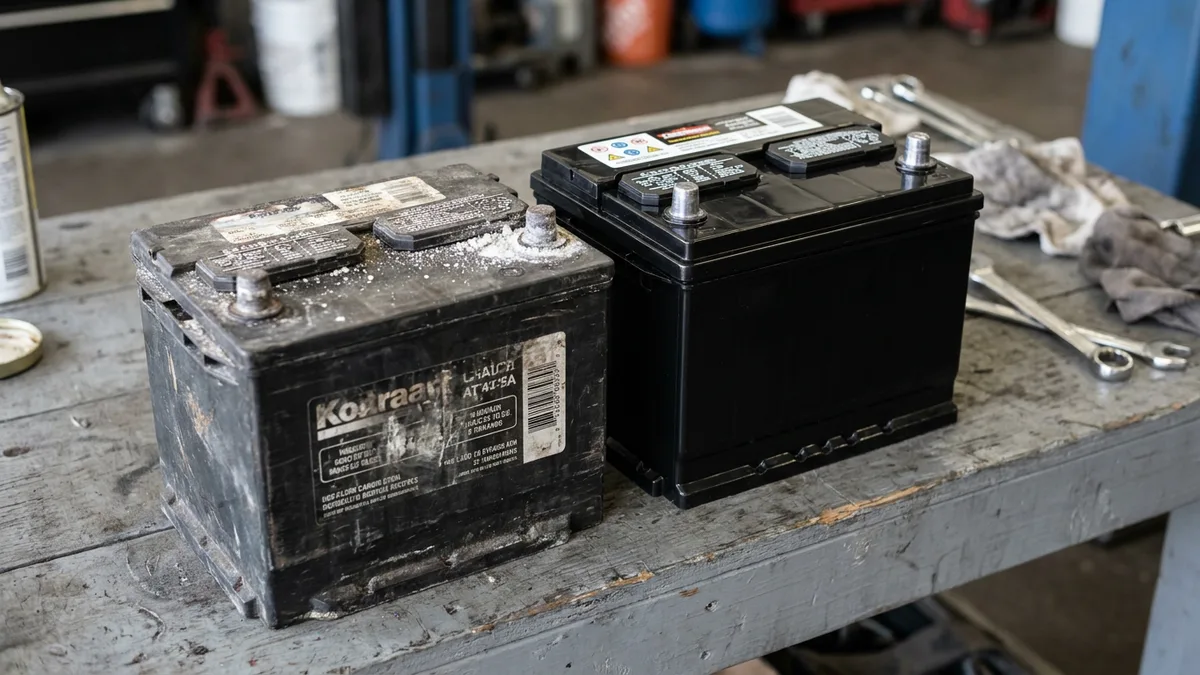
In hybrids and EVs, the 12V battery tends to cycle differently from a petrol car — it may see slightly different charge patterns depending on how the vehicle manages power distribution. But it is still a conventional lead-acid or AGM battery operating at 12 volts, and it is still subject to heat degradation, sulfation, and all the failure modes that affect any other 12V battery.
Interestingly, some hybrid drivers report that their 12V battery fails slightly faster than in petrol equivalents, because in a hybrid the petrol engine doesn’t run constantly and the charging cycle can be more intermittent.
What We Service — and What We Don’t
To be direct about scope:
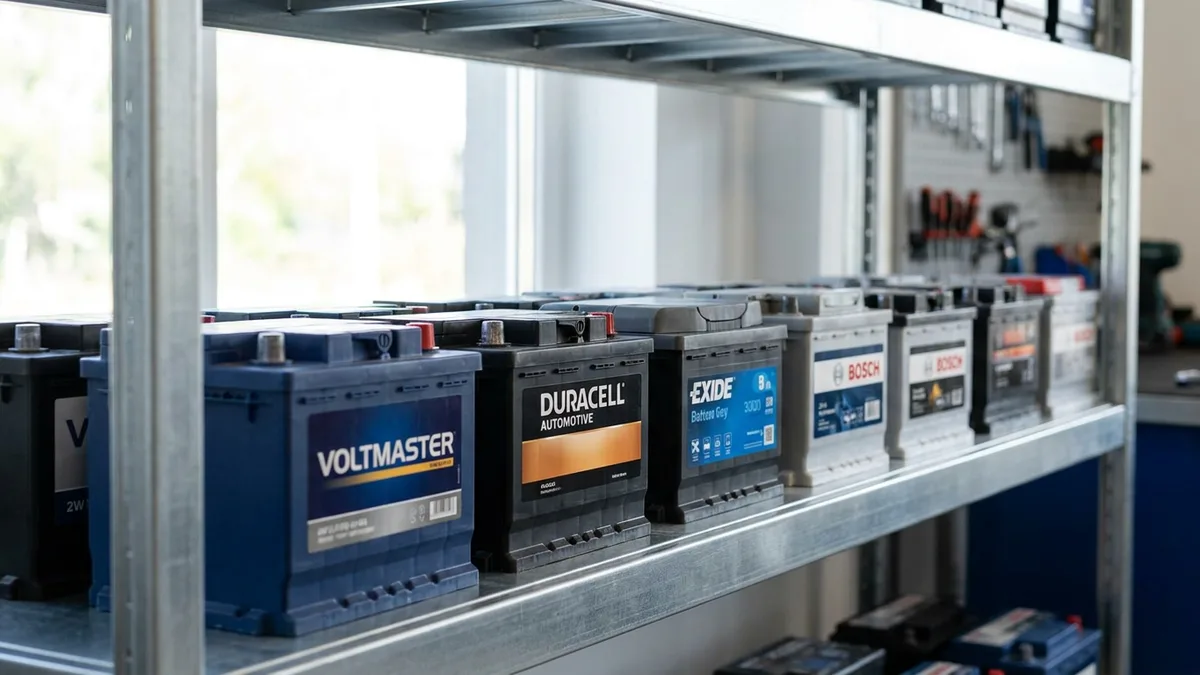
We service: 12V auxiliary and starter batteries in all vehicle types — petrol, diesel, hybrid, plug-in hybrid, and full EV. We carry standard flooded, AGM, and EFB batteries in the sizes used by the most common vehicles in Phuket, including Toyota hybrids and the growing number of EVs on the island. We test, supply, and fit these batteries mobile, across the whole island.
We do not service: High-voltage traction batteries in hybrids or EVs. These require specialized high-voltage training, specific safety equipment, and manufacturer diagnostic tools. Any work on a high-voltage battery pack must be performed by a certified dealer or specialist EV workshop.
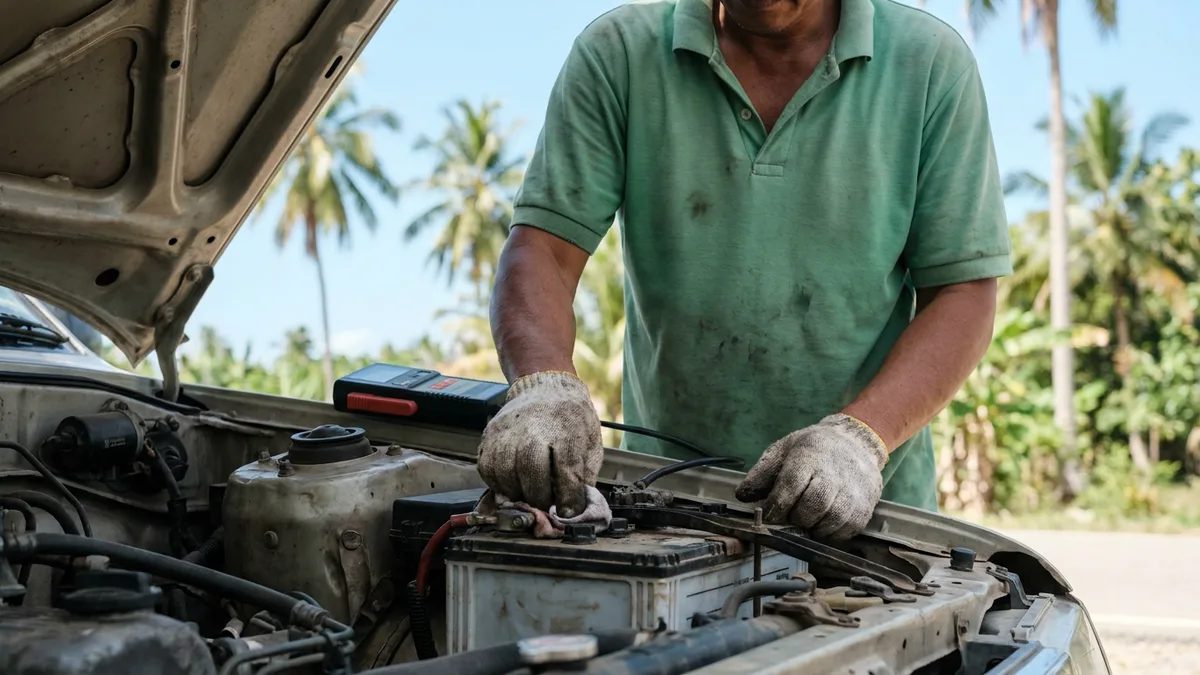
If your EV or hybrid won’t start and you’re not sure whether it’s the 12V auxiliary battery or something to do with the main traction pack, our battery testing service can quickly establish whether the 12V system is the issue. If it is, we can fix it on the spot. If it isn’t, we’ll let you know clearly and you’ll know to contact your dealership or EV specialist.
Lifespan Comparison in Phuket
In Phuket’s tropical climate, the 12V auxiliary battery in a hybrid or EV lasts roughly the same as in a petrol car:
- Standard flooded battery: 2–3 years
- AGM battery: 3–4 years
The high-voltage traction batteries in hybrids and EVs are rated for much longer — typically 8–10 years or a certain number of charge cycles — and are designed with thermal management systems intended to handle heat better than a simple 12V lead-acid cell. In Phuket, degradation of the traction pack still occurs faster than in cooler climates, but this falls outside our service scope.
For more on how battery lifespan plays out in Phuket’s climate across conventional vehicles, see our guide on how long a car battery lasts, and for brand comparisons on replacement batteries, our best car battery brands in Thailand guide covers the main options available locally.
If your EV, hybrid, or petrol car is showing signs of a failing 12V battery in Phuket, our car battery replacement service covers all three powertrain types — we’ll be at your location in about 30 minutes.