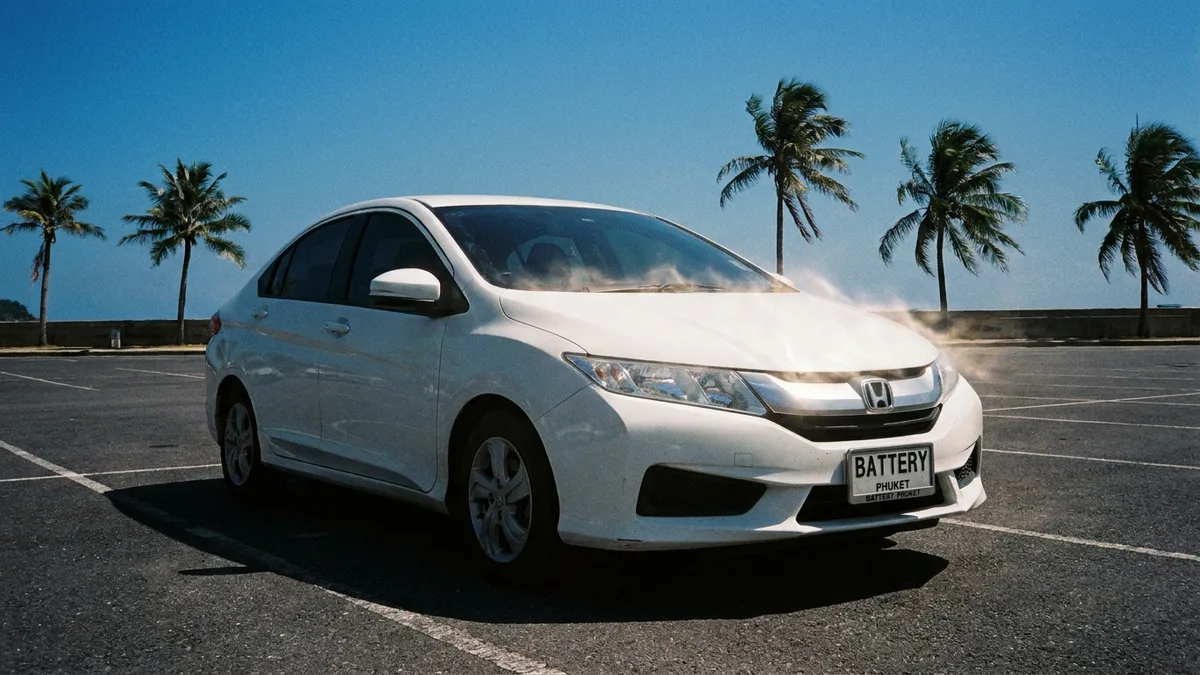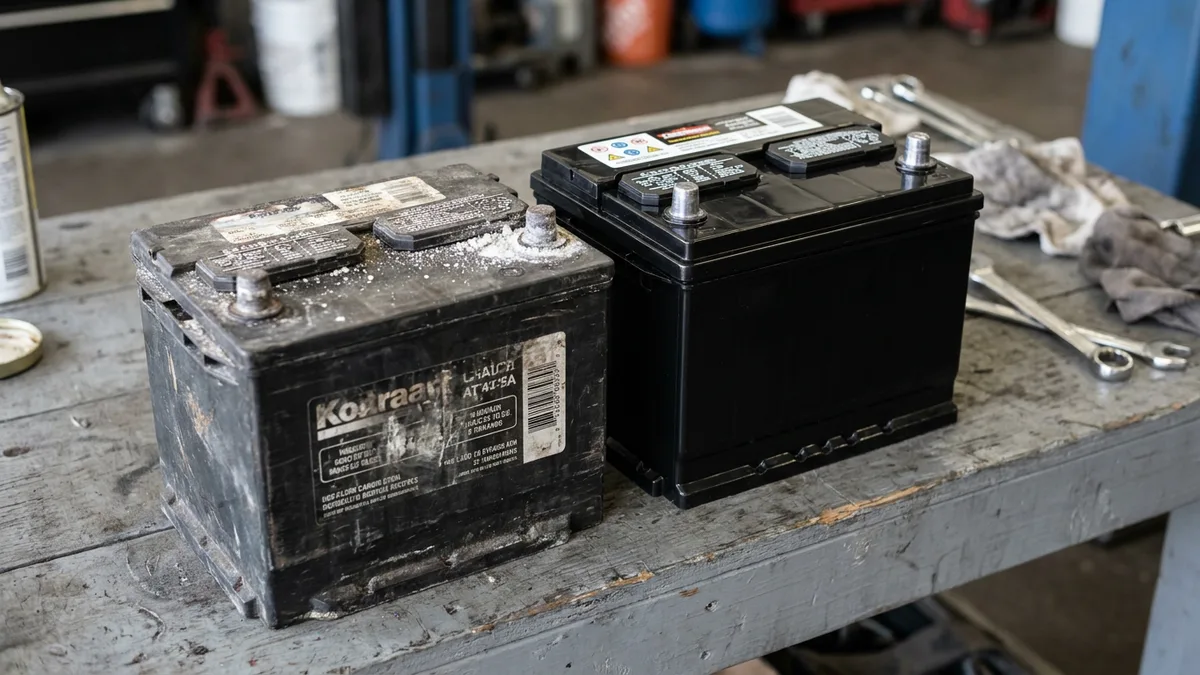
Ask a mechanic in Minnesota how long a car battery lasts and they’ll confidently say four to five years. Ask the same question in Phuket and the honest answer is closer to two to three — sometimes less. That gap isn’t a quirk of product quality or driving habits; it’s a direct result of the physics of heat and humidity acting on the chemistry inside every battery under every bonnet on the island.
If you’re driving in Phuket as a tourist, expat, or long-stay visitor, understanding how long a car battery lasts here — and why — is genuinely useful knowledge. It can save you from an unexpected breakdown on the road to Kata Beach and help you plan ahead instead of reacting to a dead battery at the worst possible moment.
The Global Baseline: What Manufacturers Expect
Battery manufacturers test and rate their products at a standard temperature of 25°C (77°F). Under those controlled conditions, a quality lead-acid battery can deliver four to five years of reliable service. Modern AGM (Absorbent Glass Mat) batteries — now common in European and Japanese cars with start-stop systems — are rated for five to seven years under the same ideal conditions.
Those numbers are real, but they assume a climate that Phuket simply does not have. They also assume a reasonably consistent charging cycle — enough regular driving to keep the battery topped up — which doesn’t always match tourist driving patterns either.
How Phuket’s Heat Shortens Battery Life
The chemistry inside a lead-acid battery is temperature-sensitive in both directions. Cold temperatures slow the chemical reaction and reduce cranking power — that’s the problem drivers in Canada or Scandinavia face. In Phuket, the problem runs the opposite way: heat accelerates the chemical reaction, and when reactions run too fast for too long, the battery degrades prematurely.
A well-established rule of thumb in battery chemistry is that every 10°C rise above 25°C doubles the rate of internal degradation. On a sunny Phuket afternoon, under-bonnet temperatures routinely reach 70–80°C. Even in the shade, ambient temperatures rarely drop below 30°C. The result is that the battery’s internal chemistry is running in a state of chronic stress, even when the car is parked.
Compounding the heat problem are two other Phuket-specific factors:
- Humidity and corrosion. High moisture accelerates corrosion on battery terminals and connectors, increasing resistance and reducing charging efficiency. A battery fighting corroded contacts doesn’t get fully recharged on each drive.
- Short trips. Many tourists and expats do a lot of short runs — guesthouse to beach, condo to market, Patong to Karon. Short drives don’t give the alternator enough time to fully recharge the battery after a cold start. Repeated partial charging leads to sulfation, where lead sulfate crystals build up on the plates and permanently reduce capacity.
Lifespan by Battery Type and Climate
The table below summarizes realistic battery lifespan expectations across different conditions:
| Battery Type | Temperate Climate | Phuket / Tropical |
|---|---|---|
| Standard flooded lead-acid | 4–5 years | 2–3 years |
| AGM (Absorbent Glass Mat) | 5–7 years | 3–4 years |
| EFB (Enhanced Flooded Battery) | 4–5 years | 2–3 years |
| Gel cell | 5–7 years | 3–5 years |
AGM batteries generally hold up better in heat because their sealed construction reduces electrolyte evaporation and they handle partial charging states better. If you’re buying a replacement battery in Phuket, AGM is worth considering, especially for vehicles with start-stop systems. Our guide to choosing the right car battery goes into this in more detail.
Factors That Accelerate Wear
Beyond heat and climate, several habits and conditions can push a battery toward early failure:
Frequent Short Trips
Every cold start draws a significant surge of current from the battery. The alternator needs roughly 20–30 minutes of highway-speed driving to fully replenish that charge. If your daily driving is a series of 5–10 minute trips, the battery never fully recovers between starts. Over months, this creates a deepening deficit that leads to sulfation and premature capacity loss.
Leaving the Car Parked for Weeks
All modern cars draw a small amount of current even when switched off — for the alarm, central locking, ECU memory, and infotainment systems. This parasitic drain is normal, but if a car sits parked for two to three weeks without being driven, even a healthy battery can discharge enough to sustain damage. In Phuket’s heat, this process happens faster than it would in a cooler climate.
Electrical Accessories
Aftermarket accessories like dash cams that run overnight, phone chargers left plugged in, or subwoofers with poor installation can all draw excess current and accelerate discharge. A battery that routinely gets deeply discharged has a measurably shorter lifespan.
Age-Related Sulfation
Regardless of usage patterns, sulfation accumulates gradually on the lead plates over time. After about two years in Phuket’s heat, many batteries begin showing measurable capacity loss. After three years, the majority are operating at significantly reduced efficiency even if they haven’t completely failed yet.
Signs That Your Battery Is Approaching the End
How long does a car battery last is ultimately a guideline, not a guarantee. Watch for these signals:
- The engine cranks more slowly than it used to before starting
- Headlights noticeably dim when the engine is idling
- The battery warning light appears on the dashboard
- Electronics — radio presets, window switches, clocks — behave erratically
- The battery requires a jump-start once, then appears fine (voltage recovery after charging doesn’t mean capacity is restored)
If you’re seeing any of these signs, a load test will give you a definitive answer. Our guide on signs your car battery is dying covers each symptom in more detail.
How to Get the Most Out of Your Battery in Phuket
You can’t change the climate, but you can reduce its impact:
- Park in shade wherever possible. Under-bonnet temperature is directly linked to ambient temperature. Shaded parking adds measurable months to battery life.
- Drive longer routes when you can. A 30-minute drive once a week does more for battery health than six 5-minute trips.
- Use a battery tender if the car will sit for more than two weeks. A smart float charger keeps the battery at optimal charge without overcharging.
- Check terminals every six months. Clean any white or greenish corrosion with a baking soda and water mixture, rinse, and apply a light coating of petroleum jelly to the terminals.
- Test annually after the two-year mark. A professional load test costs little and gives you actionable data before the battery fails rather than after.
When to Stop Maintaining and Start Replacing
If your battery is past two and a half years old in Phuket and showing any of the warning signs above, proactive replacement is almost always cheaper and less stressful than waiting for a roadside failure. A battery that fails on the road to the airport or in a hotel car park at midnight creates far more inconvenience than a scheduled swap.
Our car battery replacement service covers the full island and includes a battery test, so you’re not replacing a battery that still has useful life — only one that genuinely needs to go. If you’d like a definitive answer on your current battery’s health, our battery testing service takes about ten minutes and tells you exactly where you stand.