A flat car battery isn’t always a dead car battery. Often it’s a battery that was simply left discharged too long — a dome light left on overnight, a week of short trips that never gave the alternator time to recharge it fully, or a car parked for two weeks during a holiday in Koh Samui. In those cases, a proper charge can bring the battery back to full health. The key word is proper: rushing the process or using the wrong charger can damage the battery or, in rare cases, create a genuine safety risk.
This guide explains how to charge a car battery safely, what the different charger types actually do, and the few situations where charging won’t help at all.
Choosing the Right Charger
Not all chargers are equal, and using the wrong one for your battery type can shorten its life significantly.
Trickle Charger (Maintenance Charger)
A trickle charger delivers a very low, constant current — typically 0.5 to 2 amps. It’s slow (12–24 hours for a depleted battery) but extremely gentle. It’s the right choice for maintaining a battery during long-term storage — for example, if you’re leaving Phuket for two months and your car will sit unused. It’s too slow for emergency use.
Smart Charger (Multi-Stage Charger)
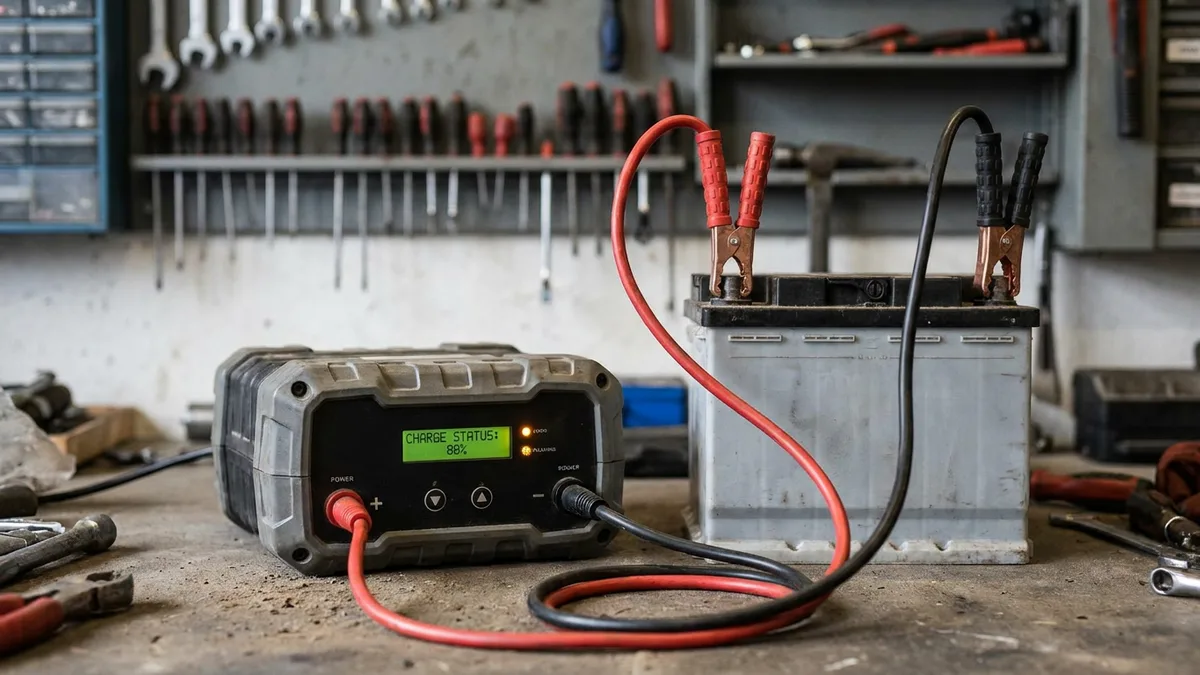
A smart charger is the best all-around option for home use. It adjusts output automatically through several phases: bulk (high current to restore most of the charge quickly), absorption (reduced current as the battery fills), and float (a maintenance current to keep it topped off without overcharging). It cannot overcharge a battery and shuts off or switches to float mode automatically.
This is what most drivers should own. Models from brands like CTEK or Optimate are widely available and cost around 1,500–3,000 THB in Phuket.
Fast Charger / Boost Charger
Fast chargers deliver 20–40 amps to restore a charge quickly. They’re used in workshops when time matters. The downside: pushing high current generates heat inside the battery, which in an already-hot Phuket environment is hard on the plates. Avoid long fast-charge sessions on a battery that isn’t already quite depleted. Never use a fast charger on an AGM battery unless the charger is specifically rated for AGM.
A Special Note on AGM Batteries
Many newer vehicles — particularly stop-start systems common on European cars rented or sold in Thailand — use AGM (Absorbent Glass Mat) batteries. These look similar to conventional flooded batteries but behave differently. They require a charger with an AGM-specific mode. Charging an AGM battery with a standard charger can overheat and permanently damage it. Check your owner’s manual or look for “AGM” printed on the battery label before connecting any charger.
Safety Checklist Before You Start
- Work in a shaded, well-ventilated area. Phuket’s midday sun heats a battery case significantly and charging adds more heat. Hydrogen gas vented during charging can accumulate in a closed space.
- Remove rings, metal bracelets, and watches before working near the battery.
- Check the battery case for cracks or leaks. Do not charge a damaged battery.
- Never smoke near a battery being charged.
- If the battery is a conventional flooded type with removable vent caps, check that the electrolyte level covers the plates before charging. Top up with distilled water only if it’s low — not tap water, not mineral water.
Step-by-Step: How to Charge a Car Battery
1. Turn off the vehicle completely. Remove the key from the ignition. If the car has a memory saver mode or you want to preserve ECU settings, consult your manual — usually it’s fine to leave the battery connected.
2. Identify the battery terminals. The positive (+) terminal usually has a red cable or cover. The negative (−) terminal usually has a black cable.
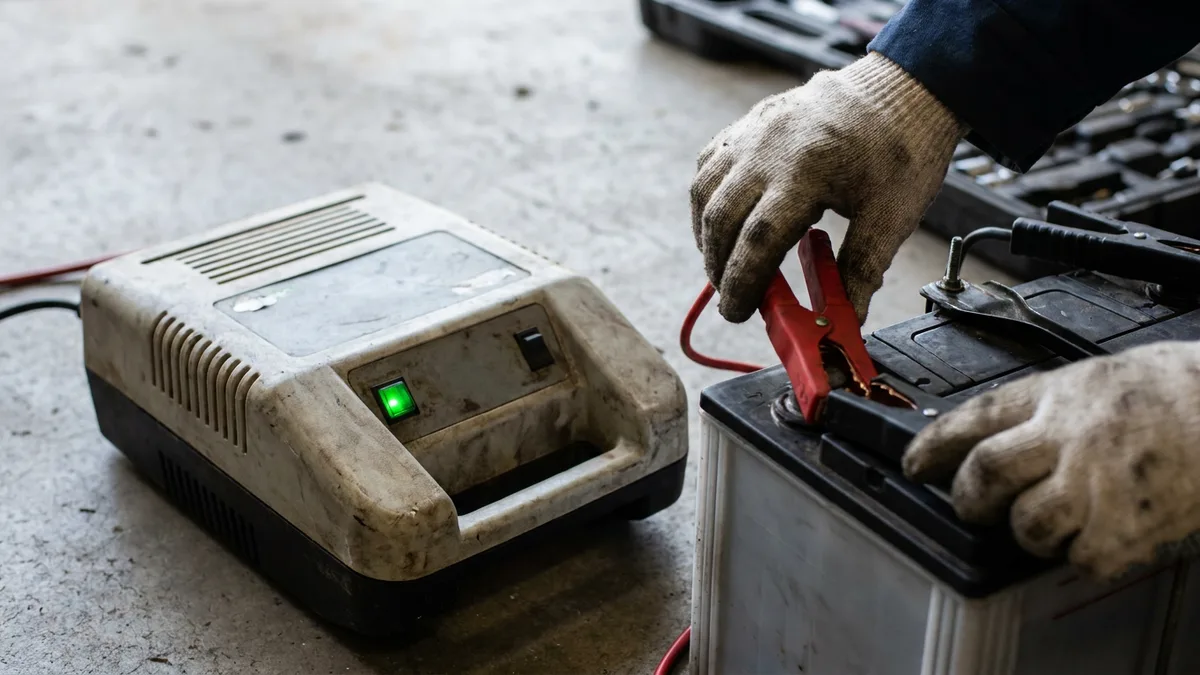
3. Connect the charger leads — positive first. Clip the red clamp to the positive (+) terminal, then clip the black clamp to the negative (−) terminal (or to an unpainted metal bracket on the engine block as a ground, which produces fewer sparks near the battery).
4. Set the charger to the correct mode. Select AGM mode if applicable. For standard flooded batteries, select the normal or “wet” mode. Choose a lower amp setting (2–10 A) for overnight charging, or follow the charger’s recommendation.
5. Plug in the charger and start. The charger’s display or indicator lights will show charging in progress.
6. Wait for completion. A smart charger will signal when done. Otherwise, check after the time appropriate for your battery’s capacity — see our guide on how long it takes to charge a car battery for a breakdown.
7. Disconnect in reverse order. Unplug the charger from the wall first, then remove the black clamp, then the red clamp.
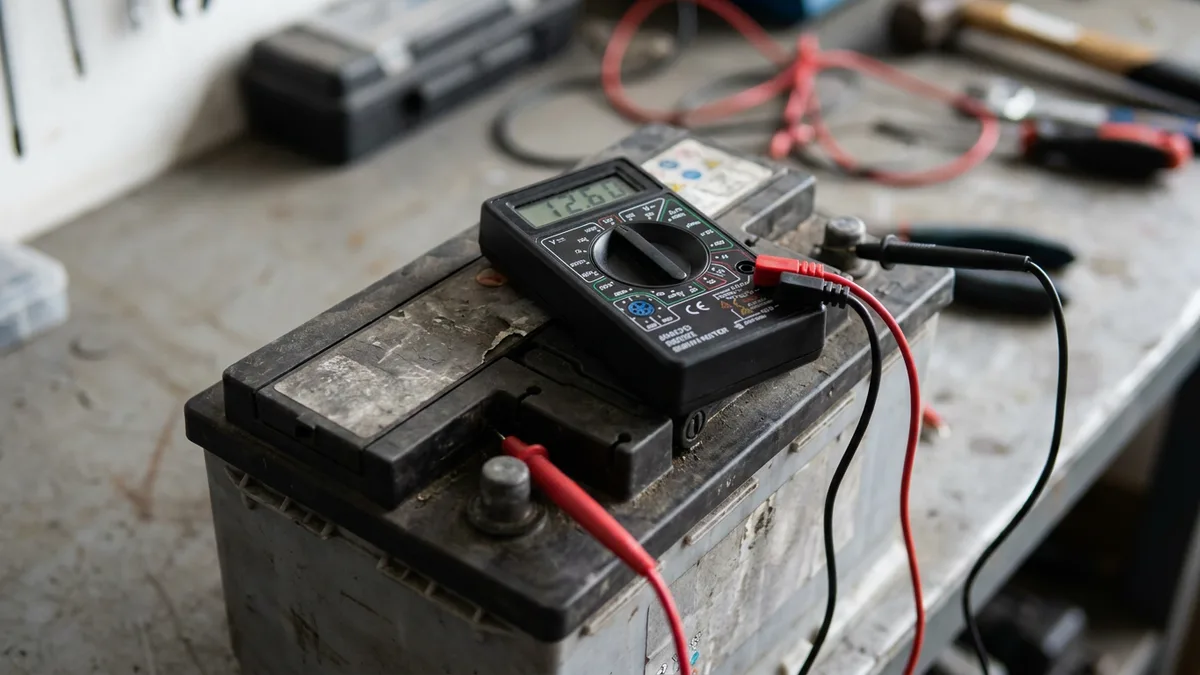
8. Let the battery rest 30 minutes, then measure voltage with a multimeter. A fully charged battery reads 12.6 V or above at rest.
Charging vs. Jump-Starting — Important Difference
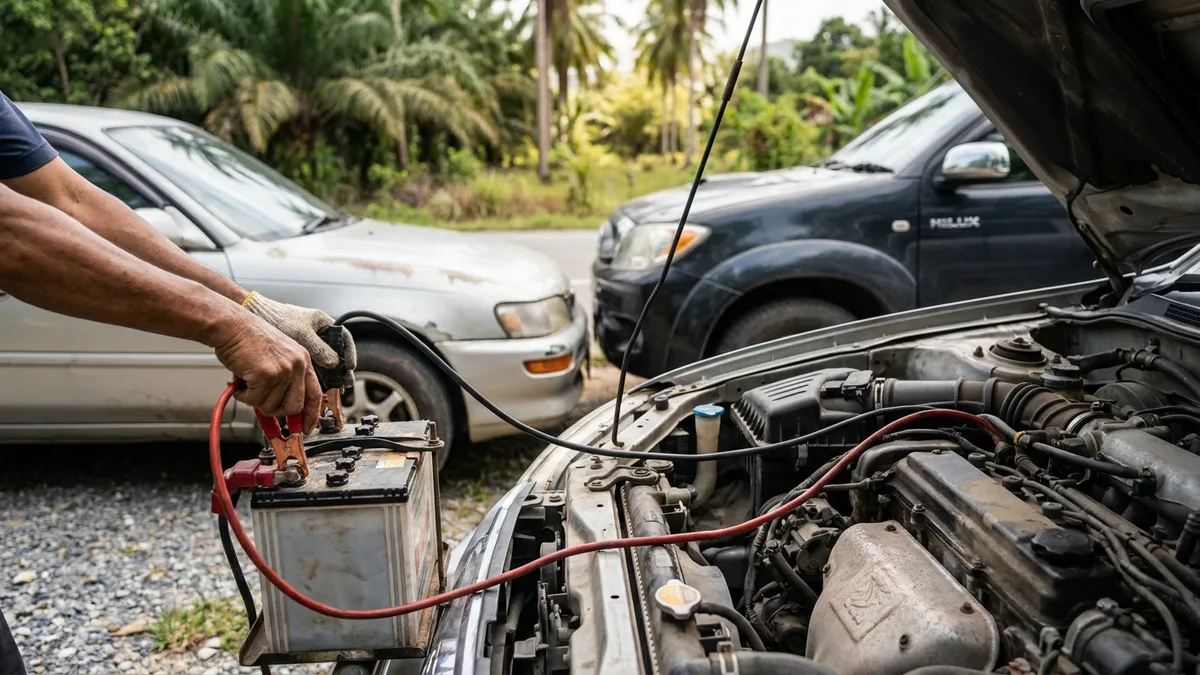
A jump start is a quick fix that gets your engine running by borrowing current from another battery or jump pack. It doesn’t restore your battery’s stored energy — it simply lets the engine start so the alternator can take over. If you jump-start your car and only drive for 10 minutes, the alternator won’t have time to fully recharge the battery, and you’ll likely need another jump start tomorrow.
Jump starting is for emergencies. Charging is for recovery.
After any jump start, the right move is to either drive for at least 30–45 minutes at moderate speed (enough time for the alternator to push significant charge in) or connect a proper charger overnight. Then test the battery voltage to confirm it’s holding charge. Our guide on how to jump-start a car covers the emergency procedure in detail.
When Charging Won’t Save the Battery
Charging restores energy to a battery that still has the physical capacity to store it. When the internal structure has degraded, no charger can help. Signs that charging won’t work:
- The battery won’t accept a charge — voltage stays very low and doesn’t rise during the charge cycle.
- Voltage rises during charging but drops back below 12.0 V within an hour of disconnecting the charger.
- The battery passes 12.6 V but fails the cranking test (drops below 9.6 V when starting).
- The battery case is swollen or has visible damage.
- The battery is more than 3 years old in Phuket and has had multiple deep discharge events.
If charging doesn’t produce a lasting result, the battery has reached the end of its useful life. Our battery testing service will give you a clear answer, and our car battery replacement service is available 24/7 anywhere on the island if the diagnosis confirms a replacement is needed.
One More Tip for Phuket’s Climate
If you leave your car parked for more than two weeks without driving — common during travel, the rainy season, or a work trip to Bangkok — connect a smart charger or trickle charger in float mode to prevent the battery from discharging to the point of sulfation. Sulfation (lead sulfate crystals forming on the plates) is the most common cause of premature battery death in hot climates, and it happens fast when a battery sits flat in 35 °C heat.
A quality smart charger left in float mode indefinitely is safe and dramatically extends battery life. It’s one of the simplest and most cost-effective things a long-stay resident or expat in Phuket can do for their vehicle.