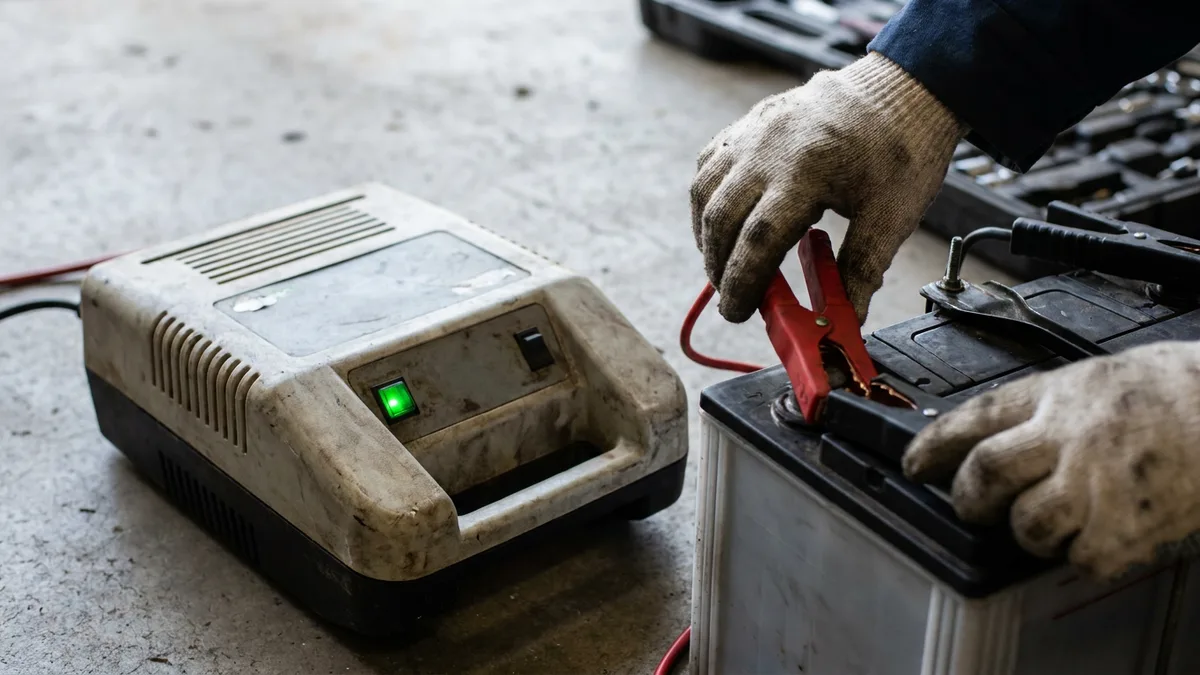
You’ve just connected a charger to your flat battery and you need to know whether to go to sleep or wait around. The honest answer depends on three things: how depleted the battery is, how many amps your charger delivers, and the size of your battery. Get those three numbers right and you can calculate a reasonably accurate estimate.
This guide explains exactly how long to charge a car battery under different conditions, with a practical table you can reference in seconds, plus guidance on recharging by driving and the situations where no amount of charging time will matter.
The Basic Formula
Charging time is simply amp-hours needed divided by charger output amps, adjusted for efficiency losses (chargers aren’t 100% efficient — a factor of about 1.1 is typical):
Approximate hours = (Amp-hours to restore ÷ Charger amps) × 1.1
A typical passenger car battery in Thailand has a capacity of 45 to 65 Ah (amp-hours). A midsize pickup or SUV common in Phuket — the Toyota Hilux, Ford Ranger, Isuzu D-Max — often uses a 70–80 Ah battery. If your battery is completely flat (0% charge) and fully rated at 60 Ah, you need to restore all 60 Ah.
In practice, batteries are rarely completely empty when you start charging — they’ve usually still got some surface voltage. But for planning purposes, assume the worst case.
Charging Time by Charger Amperage — Reference Table
The table below shows approximate charging times for three common charger output ratings across three typical battery capacities. These assume the battery starts essentially flat and the charger runs at its rated output throughout (smart chargers taper down toward the end, so real-world times for a smart charger will be slightly longer than the table suggests):
| Battery Capacity | 2 A Charger | 10 A Charger | 40 A Fast Charger |
|---|---|---|---|
| 45 Ah (small car) | ~25 hours | ~5 hours | ~1.5 hours |
| 60 Ah (midsize sedan) | ~33 hours | ~7 hours | ~1.75 hours |
| 80 Ah (SUV/pickup) | ~44 hours | ~9 hours | ~2.5 hours |
Key takeaways from the table:
- A 2 A trickle charger is ideal for maintenance and storage, not for recovering a flat battery quickly.
- A 10 A smart charger is the practical sweet spot for overnight home charging — connect before bed and the battery is full by morning.
- A 40 A fast charger is genuinely fast but generates significant heat inside the battery. In Phuket’s climate, reserve it for workshop use where the environment is controlled, and never use it on an AGM battery unless the charger is explicitly rated for AGM.
What About Recharging by Driving?
Many drivers assume that jump-starting a dead battery and then driving around Phuket for an hour will fully recharge it. The reality is more nuanced.
Your car’s alternator is designed to maintain a charged battery, not to recover a deeply discharged one. Alternator output is typically 45–90 A, but most of that current is consumed by the car’s electrical loads — headlights, air conditioning (which is basically always running in Phuket), the infotainment system, cooling fans.
The net current available to charge the battery while driving is often only 5–15 A in normal conditions. Using the formula above, that means:
- A 60 Ah battery at 50% charge (needs ~30 Ah) might recover to full in 2–6 hours of driving.
- If the battery is nearly flat when you jump-start, driving for 20 minutes to a nearby shop and parking is not enough to adequately recharge it — you’ll likely need another jump start the next morning.
Steady highway driving recharges faster than stop-and-go city driving because the engine runs at higher RPM and the alternator operates more efficiently. A 45-minute run on the bypass road from Phuket Town toward Patong at highway speed will return more charge than an hour of inching through traffic.
For a deeper look at understanding your battery’s voltage and state of charge, our guide on car battery voltage explained covers what your meter should read at each stage of the charging process.
How to Tell When the Battery Is Fully Charged
Smart Charger
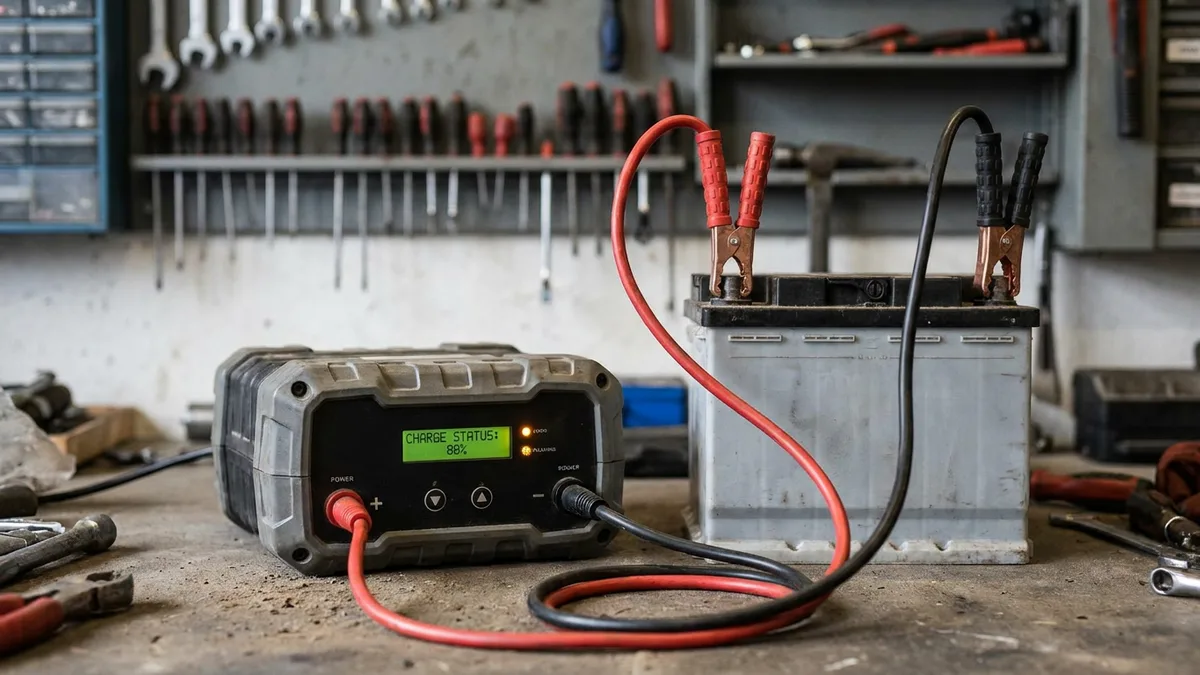
A smart charger’s indicator light or display will tell you when charging is complete. This is the most reliable method and one reason smart chargers are worth the investment.
Manual Check With a Multimeter
If your charger doesn’t have a clear completion signal:
- Disconnect the charger.
- Wait 30 minutes for the surface charge to settle.
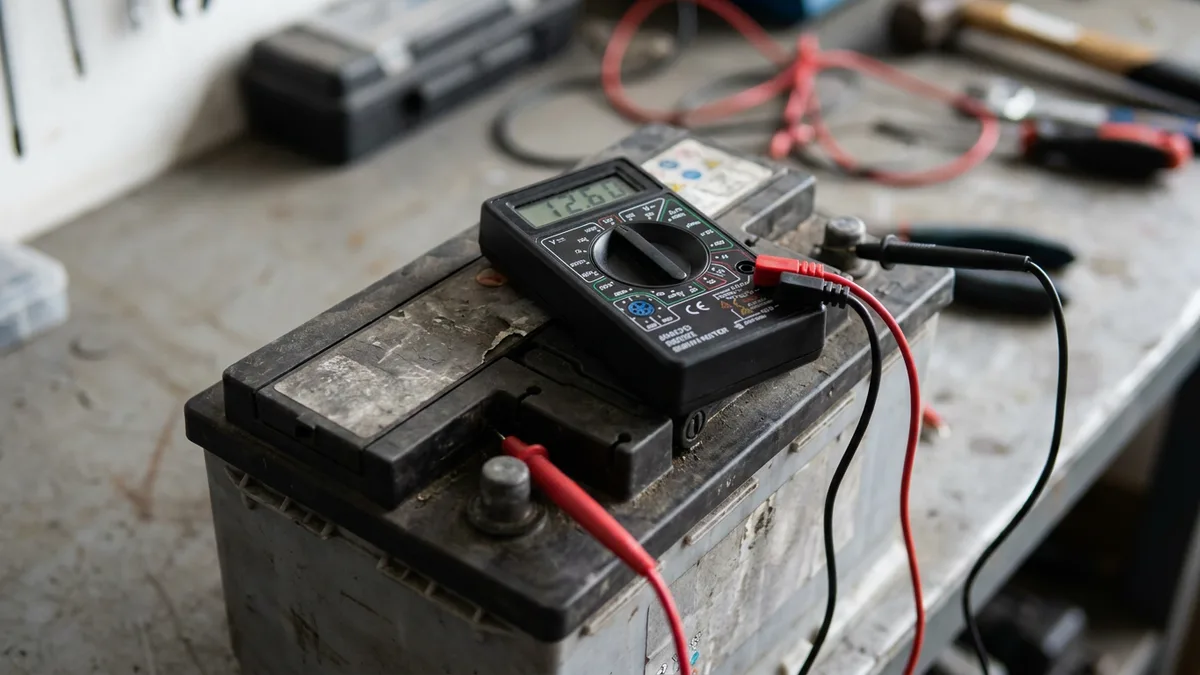
- Measure voltage with a digital multimeter.
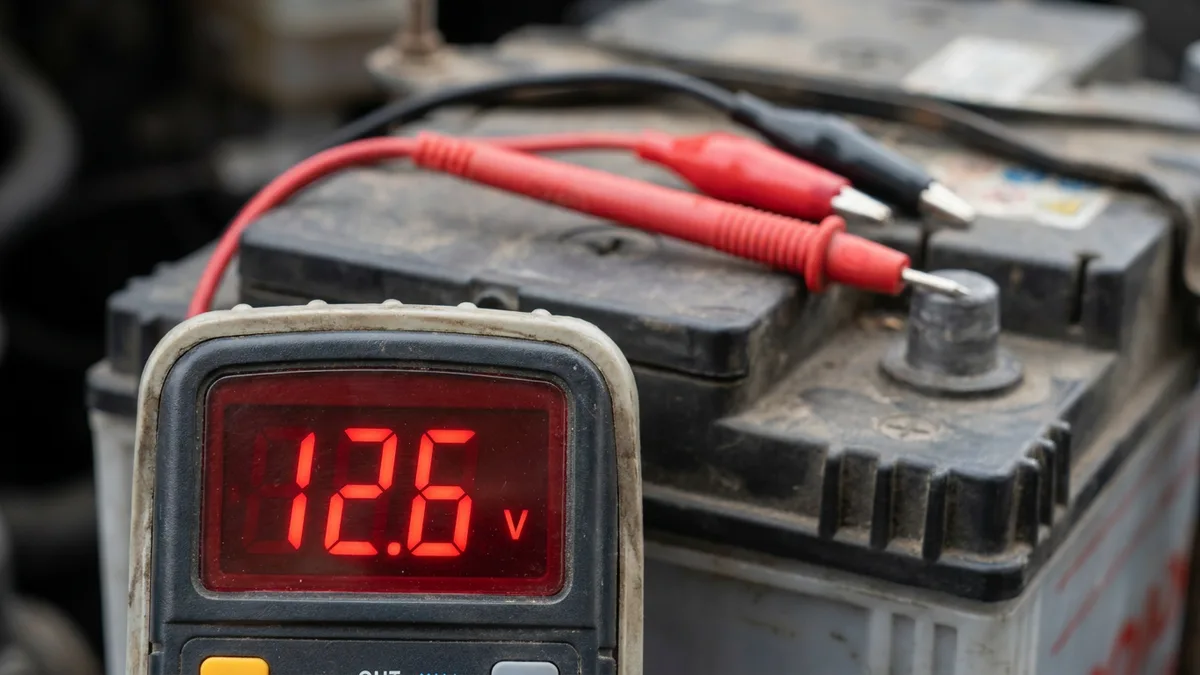
- A fully charged battery reads 12.6 V or above at rest.
Measuring immediately after disconnecting will give a falsely high reading — the surface charge from the charging process temporarily inflates the voltage. Always wait before measuring. For step-by-step multimeter instructions, see how to test a car battery with a multimeter.
When Charging Time Doesn’t Matter — The Battery Is Done
Charging time is irrelevant if the battery has lost the physical capacity to hold charge. This is common in Phuket where batteries frequently suffer:
- Sulfation — lead sulfate crystals form on the plates when a battery sits discharged in heat, permanently reducing capacity.
- Plate degradation — repeated deep discharge cycles and high temperatures gradually destroy the active material on the plates.
- Water loss — in flooded batteries, heat causes electrolyte water to evaporate. If the plates become exposed, that section of the battery is permanently damaged.
Signs charging won’t help:
- Voltage during charging stays stubbornly low and won’t rise.
- Voltage reaches 12.6 V but drops below 12.0 V within an hour of disconnecting the charger.
- The cranking voltage drops below 9.6 V when starting even after a full charge.
- The battery is over 3 years old and has been deeply discharged more than once.
If you’re charging a battery that’s over 2.5 years old in Phuket and it doesn’t seem to hold the charge, a professional test will tell you definitively. Our battery testing service uses a digital load tester that measures actual capacity in minutes. If the battery can be saved, we’ll tell you. If it can’t, we’ll give you the options clearly without pressure.
Practical Recommendation for Phuket Drivers
For a battery that’s drained from a light left on or a car that sat for a week:
- Connect a 10 A smart charger overnight. That covers virtually any standard passenger car battery regardless of size.
- Charge in the shade — ideally morning or evening, not the 35 °C midday heat.
- Check voltage after a 30-minute rest to confirm it reached 12.6 V.
For a battery that’s been flat for several days in the heat, add the same charging process but follow it up with a professional battery health check to confirm capacity wasn’t damaged by the prolonged discharge. It takes about two minutes and saves you from the unpleasant surprise of the battery failing again the next week.