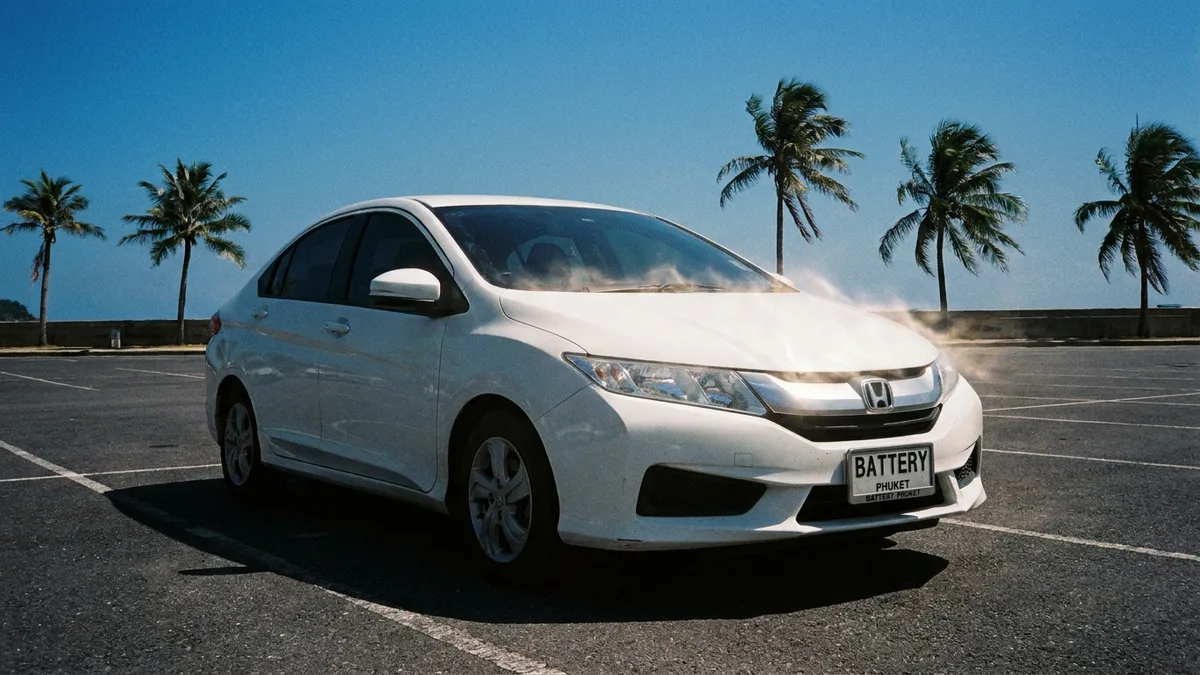
If you’ve lived in or visited Phuket for any length of time, you’ve probably noticed that locals replace their car batteries more often than friends back home. That’s not bad luck or inferior products — it’s physics. The combination of sustained tropical heat, intense sunlight, and high humidity is genuinely brutal on lead-acid batteries, and understanding why can help you avoid getting stranded in a car park at Patong Beach or outside Lotus’s on a sweltering afternoon.
This guide digs into the real chemistry behind car battery heat damage, explains why the Phuket climate cuts battery life roughly in half compared to cooler countries, and gives you practical steps to get the most out of every battery you buy here.
The Basic Science: Why Heat Is a Battery’s Worst Enemy
A standard lead-acid car battery works through a chemical reaction between lead plates and a sulfuric acid electrolyte solution. Temperature is central to how well — or how badly — that reaction runs.
In cold climates, the concern is that low temperatures slow the chemical reaction and reduce cranking power. In tropical climates like Phuket’s, the problem is the opposite: heat speeds up chemical reactions, and when those reactions run too fast and too hot for too long, they destroy the battery from the inside out.
Every 10°C rise in temperature above 25°C roughly doubles the rate of chemical degradation inside a battery. Phuket’s under-bonnet temperatures regularly exceed 80°C on a sunny day, and even shaded, ambient temperatures sit around 32–36°C year-round. Do the math and you’re looking at degradation running several times faster than a battery manufacturer’s baseline assumptions, which are almost always tested at a comfortable 25°C.
Electrolyte Evaporation: The Slow Drain You Can’t See
One of the most damaging effects of sustained heat is electrolyte evaporation. The sulfuric acid and water mixture inside a battery generates heat during charging and discharging. In a hot climate, that heat causes water to evaporate faster than the battery can compensate.
As electrolyte levels drop:
- The lead plates begin to expose above the fluid line, where they oxidize and corrode irreversibly
- The concentration of sulfuric acid increases, accelerating plate corrosion even further
- Internal resistance rises, meaning the battery has to work harder to deliver the same cranking power
- Overall capacity shrinks — the battery holds less charge than it should
In a sealed, maintenance-free battery (which most modern vehicles use), you can’t top up the water. Once that electrolyte is gone, the damage is permanent. In Phuket’s heat, this process can begin noticeably within the first year, even in a brand-new battery.
Plate Corrosion and Sulfation: The Two-Punch Combination
Heat accelerates two interconnected destructive processes: plate corrosion and sulfation.
Plate corrosion happens when lead plates react with the electrolyte and, over time, literally crumble or shed material. High temperatures speed this up. The shed material settles at the bottom of the battery case and can eventually short-circuit individual cells, causing sudden death.
Sulfation is the buildup of lead sulfate crystals on the plates, which happens naturally during discharge but reverses during proper charging. In chronic heat, however, sulfation happens faster than normal charging can clear it. Hard sulfate crystals accumulate permanently, reducing the active plate surface area and shrinking the battery’s capacity.
Together, these two processes are why a battery that tests at 12.4 volts in January might still struggle to start the car by March — not because the voltage dropped, but because the internal capacity quietly collapsed.
Faster Self-Discharge in the Heat
Here’s a particularly nasty side effect that catches tourists off guard: batteries self-discharge faster in heat.
Even a healthy battery sitting in a parked car will lose charge over time due to parasitic loads (clocks, alarms, computers) and natural self-discharge. In temperate climates, a battery might drop 1–3% of its charge per week while parked. In Phuket’s heat, that rate roughly doubles.
This matters enormously if you rent a car and leave it parked for three or four days while you island-hop, or if you’re an expat who goes home for a month over the holidays and leaves your car in the driveway. The battery doesn’t just sit still — it actively drains, and heat pushes it below the threshold for safe starting much faster than you’d expect. See our guide on dead batteries in rental cars in Phuket for what to do in that specific situation.
Why Phuket’s 2–3 Year Battery Life Is Normal
In the UK, Germany, or the US Pacific Northwest, a quality car battery typically lasts 4–6 years. In Phuket, 2–3 years is the honest expectation for most vehicles. Several local factors compound the basic heat chemistry:
| Factor | Why It Matters in Phuket |
|---|---|
| Year-round heat (32–36°C ambient) | Constant elevated degradation rate, no winter reprieve |
| Intense direct sunlight | Under-bonnet temps push 80–90°C when parked outside |
| High humidity | Accelerates terminal corrosion and current leakage |
| Short-trip driving | Engine may not run long enough to fully recharge battery |
| Frequent AC use | Heavy electrical load keeps battery working harder |
| Flooding/water intrusion | Saltwater exposure corrodes terminals and casings quickly |
Short-trip driving deserves special attention. Many people in Phuket use their car primarily for quick runs — from their villa to the market, hotel transfers, school pickup. A typical short trip might only run the engine for 5–10 minutes, which isn’t long enough for the alternator to fully replenish what the starter motor took out. Over time, a battery that’s perpetually slightly undercharged sulfates faster and degrades faster. Add Phuket’s heat and the process accelerates sharply.
How Heat Affects Different Battery Types
Not all batteries respond to Phuket’s heat the same way:
Standard flooded lead-acid batteries are the most heat-sensitive. They’re common in budget vehicles and older cars. In Phuket’s climate, expect 18–30 months before they start showing weak performance.
AGM (Absorbed Glass Mat) batteries are more heat-resistant because the electrolyte is absorbed in glass mats rather than free-floating. They still suffer in extreme heat but generally outlast standard batteries by 6–12 months in tropical conditions. They’re also better at handling the repeated deep discharges that come from heavy AC use.
EFB (Enhanced Flooded Battery) batteries, common in stop-start vehicles, sit between standard and AGM in heat tolerance. If your car came with an EFB, it’s important to replace it with at least EFB — fitting a standard battery will shorten its life even faster.
Recognizing Heat Damage Before It Leaves You Stranded
Heat damage is cumulative and often invisible until the moment of failure. Watch for these warning signs:
- Slow cranking — the starter motor turns sluggishly, especially on a very hot day
- Needing a jump-start after the car sits for two or three days
- Battery warning light illuminating on your dash, even briefly
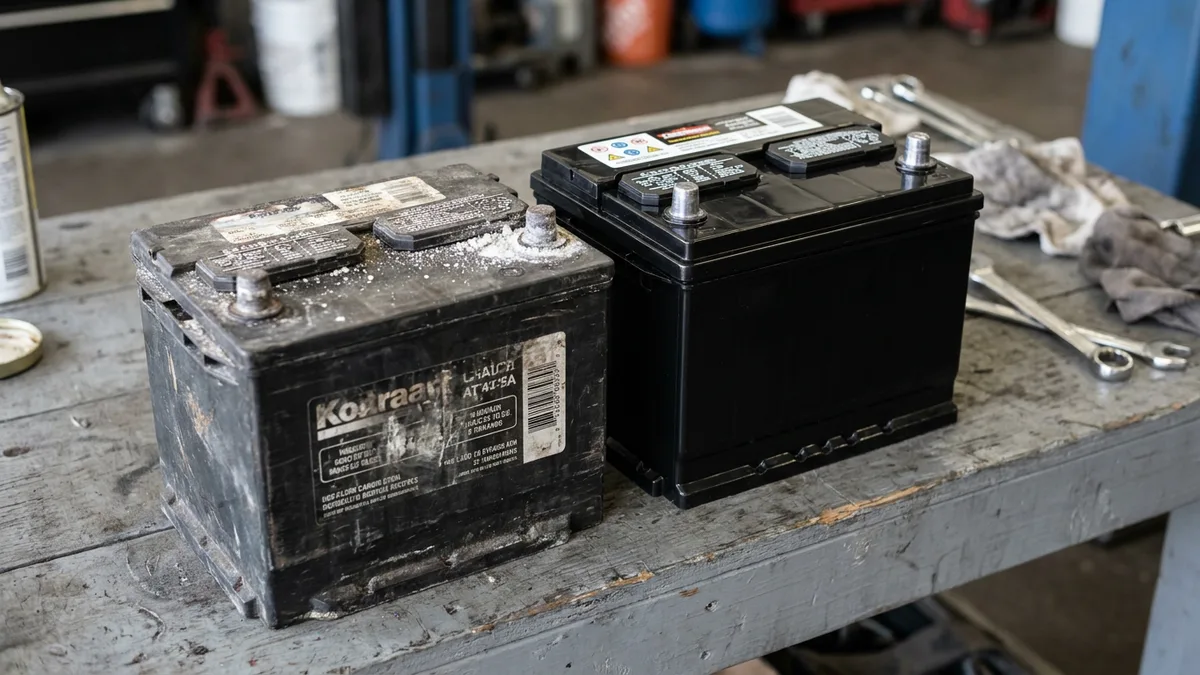
- Swollen or bulging battery case — a sure sign of excessive internal heat
- White or greenish crust on terminals (not always heat-specific, but worsens with humidity)
- Battery older than 2 years — in Phuket, this alone warrants a test
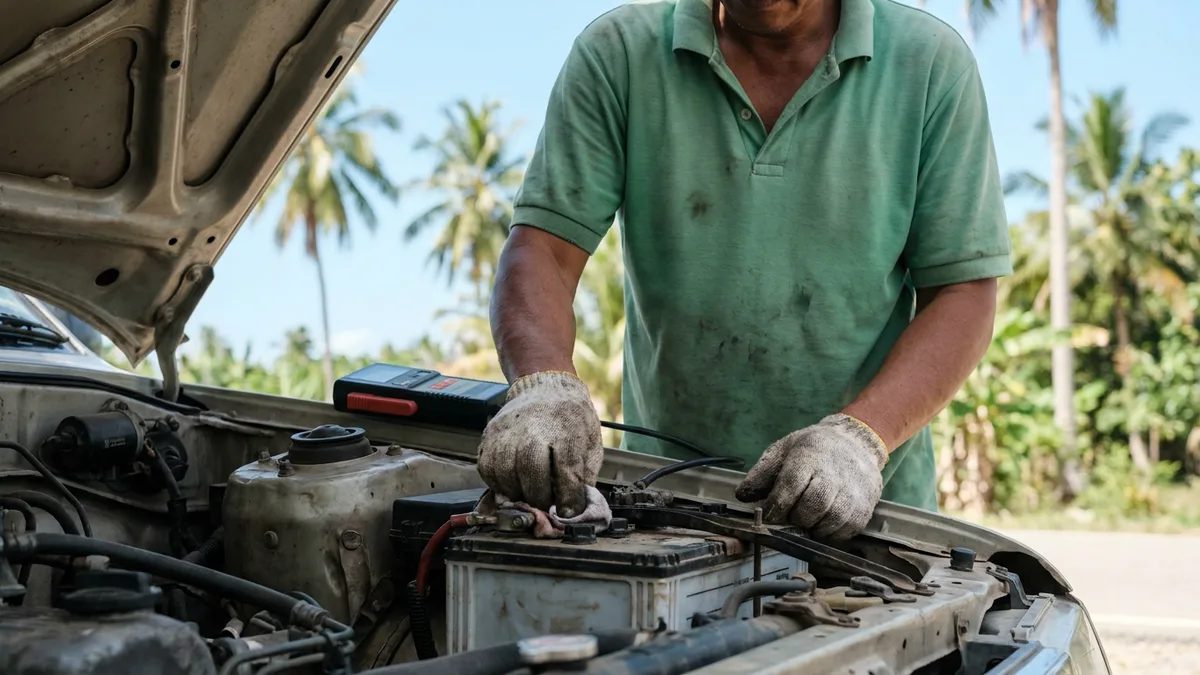
If you notice any of these, don’t gamble. A professional battery test takes under ten minutes and tells you exactly where your battery stands before it fails at the worst possible moment.
Practical Steps to Slow Down Heat Damage
You can’t change the climate, but you can reduce how brutally it treats your battery:
- Park in shade or a covered car park whenever possible. This alone can reduce under-bonnet temperature by 20–30°C and significantly slow electrolyte evaporation.
- Drive regularly and long enough — at least 20–30 minute trips a few times a week gives the alternator time to fully recharge the battery.
- Keep terminals clean — corrosion adds resistance that makes the battery work harder. A little baking soda and water every few months keeps connections tight.
- Use a battery maintainer (trickle charger) if the car sits for more than a week. This is especially important during long holidays.
- Test annually — after the first year in Phuket’s climate, an annual health check lets you plan a replacement on your schedule, not in a roadside emergency.
- Choose AGM if available — if you’re replacing a battery, AGM batteries better tolerate Phuket’s conditions and usually pay for themselves in extended service life.
For a full breakdown of daily habits that extend battery life, see our guide on car battery care in a tropical climate.
When It’s Time to Replace, Don’t Wait
The nature of heat-accelerated battery failure is that it often looks like a minor problem right up until it isn’t. A battery that barely starts the car in the cool of the morning might completely fail to start it after sitting in a hotel car park for six hours in the afternoon sun.
If your battery is over two years old, showing any warning signs, or you’re heading out for a long Phuket road trip — Phang Nga, Krabi, a drive across the island — it’s worth having it checked or replaced proactively. Our car battery replacement service comes to you anywhere on the island, 24 hours a day, so you’re never truly stuck.
If you suspect your battery is already struggling and want help deciding what to do next, call us or reach out — we carry a full range of batteries suited to Phuket’s climate and can assess your situation quickly.