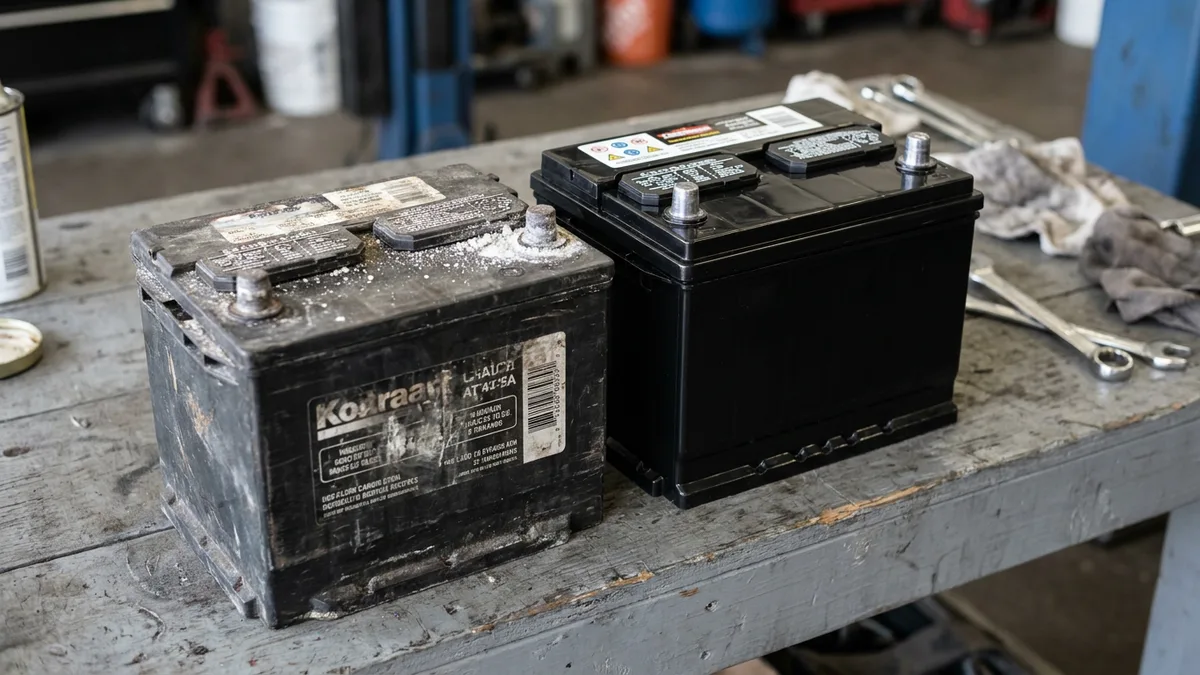
In a temperate climate, “replace your car battery every four to five years” is sensible advice. In Phuket, following that schedule will likely leave you stranded in a car park somewhere between years two and three, wondering why nobody warned you. The island’s combination of intense heat, high humidity, and the driving patterns common among tourists and expats creates conditions that are genuinely hard on batteries — and that means the replacement interval needs to shift accordingly.
So how often should you replace your car battery in this part of the world? The short answer is every two to three years. The more useful answer involves understanding when and why — and how a simple test can take the guesswork out of the decision entirely.
Why Phuket Changes Everything
Battery manufacturers rate their products at 25°C (77°F). Under those ideal lab conditions, a standard flooded lead-acid battery delivers four to five years of reliable life. AGM batteries push that to five to seven years.
Phuket’s ambient temperature rarely drops below 30°C, and under-bonnet temperatures during daytime driving routinely hit 70–80°C. At those temperatures, the chemical reactions inside the battery run in overdrive. Internal degradation — electrolyte evaporation, plate corrosion, sulfation — happens at two to four times the rate assumed by the manufacturer’s rated lifespan.
The practical result: most batteries installed in vehicles driven in Phuket start showing real performance decline around the 18–24 month mark, and by 30–36 months the majority are operating well below their rated capacity. Some fail sooner; a few make it past three years. But three years is approximately where the risk of unexpected failure becomes high enough to make replacement advisable even if the battery hasn’t completely given out yet.
Our guide on why car batteries die faster in Phuket’s heat covers the underlying chemistry in more depth if you want to understand exactly what’s happening inside the case.
The Two Schools of Thought: Proactive vs. Reactive
There are two ways to handle battery replacement:
Reactive replacement means waiting until the battery either fails entirely or gives you enough warning signs that it’s clearly finished. It’s the default approach for most drivers because it requires no planning. The downside is that batteries don’t always fail conveniently. They die in car parks, on highways, outside the airport at 2 a.m., or in the rain on a road you don’t know well. In Phuket, where you may not speak Thai and may be far from home, a roadside failure is considerably more stressful than it would be in your home city.
Proactive replacement means testing the battery after a set number of years and replacing it when the data says it’s approaching the end of reliable life — before it actually strands you. This approach costs the same or less overall (you replace on your schedule, not in an emergency), and it eliminates the risk of inconvenient failure entirely.
The case for proactive replacement is especially strong in Phuket, where the timeline is shorter and the consequences of a mid-trip failure can be more complicated.
How a Battery Test Makes the Decision Easy
You don’t have to guess or go purely by calendar. A professional load test takes about ten minutes and gives you objective data:
- Voltage at rest — a fully charged healthy battery reads 12.6–12.8 V; anything under 12.4 V at rest indicates a depleted or weakened cell
- Cranking amps under load — the test draws current as if starting the engine and measures whether the battery delivers its rated Cold Cranking Amps (CCA)
- Capacity percentage — most modern testers report remaining capacity as a percentage; below 70–75% of rated capacity, replacement is advisable
A battery that tests at 60% capacity may still start the car on a cool morning, but it has very little reserve for a hot afternoon, an extended idle, or a slightly taxing cold start. Getting a test reading gives you something concrete to act on rather than a vague sense of unease.
Our battery testing service is available island-wide, and if the test shows you need a replacement, we carry it and can fit it on the spot.
Replacement Timing by Scenario
Not every driver in Phuket is in the same situation. Here’s a practical breakdown:
Year-Round Residents and Daily Drivers
If you’re driving every day in Phuket, aim to test your battery at the two-year mark. Most batteries will still pass, but you’ll have baseline data. Test again at two and a half years. By three years, if the battery passes, replace it anyway if you’re planning any longer trips or relying on the car for anything time-sensitive.
Seasonal Visitors and Snowbirds
If you leave your car sitting for extended periods — two months, three months, or longer — the replacement calculus changes. Idle time is hard on batteries in any climate, and in Phuket’s heat it’s particularly damaging. A battery that sits uncharged and in high heat loses capacity at an accelerated rate. Plan to have the battery tested before each extended idle period and immediately on return. See our guide for long-stay visitors leaving a car idle for specific tips.
Rental Cars and Lease Vehicles
If you’re renting a car, the battery is the rental company’s problem — until it strands you at an inconvenient time. A flat rental car battery is a relatively common experience in Phuket. Our 24-hour emergency service handles rental battery situations, but if you’re mid-trip and the car has been feeling sluggish to start, it’s worth asking the rental company when the battery was last replaced.
Newly Arrived Expats
If you’ve bought a second-hand car in Phuket, one of the first things worth knowing is the battery’s age. If the previous owner can’t confirm the installation date, treat it as unknown and get a load test. There’s no benefit in gambling on a battery of uncertain age in this climate.
What to Look For Between Tests
Even with a testing schedule, keep an eye out for these indicators that the battery may need attention ahead of schedule:
- Slow cranking — the starter motor sounds labored or the engine takes longer than usual to fire
- Dim headlights at idle — lights that brighten noticeably when you rev the engine suggest the battery is not holding charge
- Electrical gremlins — intermittent issues with windows, locks, infotainment, or dashboard displays
- Visible corrosion on the terminals — white or greenish buildup increases resistance and accelerates discharge
- More than one jump-start in a three-month period — a battery that needs repeated jump-starts is past the point of reliable service
Our signs your car battery is dying guide goes into each of these in detail.
Making the Practical Call
The cleanest rule of thumb for Phuket: test at two years, replace by three. Adjust earlier if you’re leaving the car idle for long stretches, if you do mostly short trips, or if you’re seeing any warning signs.
When you’re ready for a new battery, our car battery replacement service includes a final confirmation test so you’re only replacing what genuinely needs replacing. We cover all of Phuket — from Patong and Kata to Phuket Town and the airport area — and there’s no need to tow the car to a shop. We come to you.